Introduction
Introduction
 Venerable Thubten Chodron
  Blossoms of the Dharma
  Dec 28, 1999
From Blossoms of the Dharma: Living as a Buddhist Nun, published in 1999. This book, no longer in print, gathered together some of the presentations given at the 1996 Life as a Buddhist Nun conference in Bodhgaya, India.
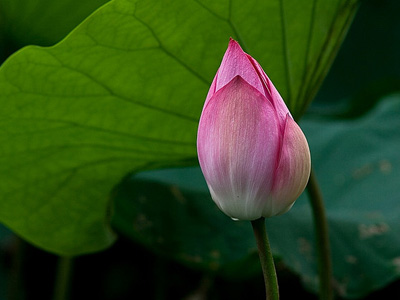
Buddhist nuns who are dedicated to ethical discipline give us hope and optimism in our materialistic, violent world. (Photo by Jerry Hsu)
When the first blossoms appear in springtime, our hearts are uplifted. Each blossom is unique and attracts our attention, generating in us a sense of inspiration and curiosity. In the same way, Buddhist nuns who are dedicated to ethical discipline give us hope and optimism in our materialistic, violent world. Having given up family life and consumerism to devote their lives to Buddhist teachings, or Dharma, they catch our attention. They voluntarily assume precepts—ethical guidelines to train their body, speech, and mind—and abstain from having careers, regular social lives, and intimate physical relationships. Yet these nuns are happy and have a sense of meaning and purpose in life. What are their lives like? Blossoms of the Dharma: Living as a Buddhist Nun gives a glimpse of the fascinating world in which they move.
Most of the contributors to this book are Western women who are ordained Buddhist nuns. They are a relatively new phenomenon, the fragrant blossoms of a tradition with ancient roots going back more than twenty-five centuries. How did the nuns’ order begin in India, and why would women raised in the West wish to become Buddhist monastics in the twentieth century?
The nuns’ order
Soon after the Buddha’s enlightenment, many people were attracted to this serene, wise, and compassionate man and sought to become his disciples. Some became lay followers, maintaining their lives as householders with a family, while others became monks, thus beginning the order of monks. Five years after this, the order of nuns began. The inspiring story of its origin begins with Mahaprajapati, the Buddha’s aunt and stepmother who cared for him as a child. She, together with five hundred women from the Shakya clan, shaved their heads and walked the long distance from Kapilavastu to Vaisali to request ordination. At first the Buddha declined, but after the intercession of his close disciple Ananda, the Buddha confirmed women’s ability to attain liberation and began the bhikshuni or full ordination for women. The order of nuns existed and flourished for many centuries in India and spread to other countries as well: Sri Lanka, China, Korea, Vietnam, and so forth. In the twentieth century, many Westerners have become Buddhist, and of those, some have chosen to ordain as monastics.
Buddhism is still new in the West. Dharma centers and temples from a variety of Buddhist traditions exist in most Western countries. Monasteries devoted to study and meditation practice, on the other hand, are fewer, as most monastics tend to live in a Dharma center or temple where they interact with and serve the lay community. Very little research has been done about Buddhist monastics of either Asian or Western origin living in the West, nor are there statistics about the number of monks and nuns. It is a fascinating subject worthy of research. This book presents an introduction to the lives and lifestyles of this new generation of nuns.
Westerners turning to Buddhism
In the past four decades, Westerners’ knowledge of and interest in Buddhism has increased dramatically. Many factors have contributed to this: for example, improved communication and technology making more information available; improved transportation allowing Asian teachers to come to the West and Westerners to visit Asia; political upheavals driving Asians from their homelands to other countries; the youthful rebellion and curiosity of many baby boomers; and disillusionment with Western religious institutions.
However, beyond these external conditions are internal ones as well. The Western nuns who contributed to this book come from a variety of countries and religions of origin. Some were clearly on a spiritual search, others “stumbled” upon Buddhism. But all of them found meaning in the Buddha’s teachings and in Buddhist meditation. In the Buddha’s first teaching, he explained the four noble truths: 1) our life is filled with unsatisfactory experiences; 2) these have causes—ignorance, anger, and clinging attachment within our minds; 3) there exists a state free from these—nirvana; and 4) there is a path to eliminate these unsatisfactory experiences and their causes and to attain nirvana. In this way he explained our present situation, as well as our potential, and clearly described a step-by-step path for transforming our minds and hearts. This practical approach, which can be applied in daily life, not just in a temple or church, is attractive to many people in the West. Similarly, meditation, which can be done either alone or in a group, provides a way to understand, accept, and improve ourselves. In addition, meeting realized Asian masters convinced the first generation of Western Buddhists that spiritual transformation is indeed possible. In their talks, some of the nuns share what attracted them to the Dharma, as well as the reasons that led to their ordination.
The monastic life
Of course, not everyone interested in Buddhism or becoming a Buddhist is interested in becoming a monastic. People have various dispositions and inclinations, and one can practice the Dharma as a lay person as well. In fact, most Buddhists in both Asia and the West remain lay practitioners. Nevertheless, there is a corner in many people’s hearts that wonders, “What would it be like to be a monastic?” Even when people decide that monasticism is not a life style suitable for them, it is still valuable for them to understand and appreciate it, because the monastics are a noticeable and important element in the Buddhist community.
If we practice a spiritual path—as a lay person or as a monastic—we clearly have to make certain changes in our daily habits to develop our positive qualities and behaviors and to discourage negative ones. For this reason, the Buddha encouraged us to voluntarily assume the discipline of either a lay practitioner who holds five precepts—to avoid killing, stealing, unwise sexual conduct, lying, and taking intoxicants—or of a monastic. Taking monastic precepts is not a requirement, but for those so inclined, it solidifies their intention and gives extra strength to their practice. The monastic precepts include basic ethical injunctions, such as to abandon killing, stealing, lying, and all sexual activity. They also include guidelines for living together as a community, for handling requisites for daily life such as food, clothing, shelter, and medicine, and for engaging with people within the monastic community, in the Buddhist community, and in the larger society in general. At the Buddha’s time, the monastic order began as a loose group of wandering practitioners. Over time stable communities were formed, and such communities continue to this day. These communities enable monastics to study, practice, and observe together the precepts established by the Buddha.
As Buddhism spread to different areas in ancient India, several Vinaya schools arose. Of these, three are existent today: the Theravada, principally found in Sri Lanka and Southeast Asia; the Dharmagupta, chiefly followed in China, Vietnam, Korea, and Taiwan; and the Mulasarvastivada, mainly practiced among Tibetans. Although they have slightly different ways of enumerating the precepts, they are remarkably similar. All of these traditions set out various levels of ordination: novice (sramanera/sramanerika), probationary nun (siksamana), and full ordination (bhikshu/bhikshuni). Each level of ordination has a corresponding number of precepts, and a candidate receives each ordination during a ceremony conducted by the sangha.
As a Buddhist monastic, one can live a variety of lifestyles; the only requisite is to observe the precepts as best one can. For example, a monastic may sometimes live in a monastery in the countryside and other times live in a flat in a city. She may have periods during which her life centers on service to the community and other periods when she focuses on study, teaching, or meditation. Sometimes she may live an active life amidst many people and other times do meditation retreat alone, observing silence for months. What remains constant in all these varying circumstances is that her day begins and ends with meditation and prayer, and during the day, she observes the monastic precepts as best she can. Such a variety of lifestyles is allowed, and a monastic adopts a particular one by following the guidance of her spiritual mentor.
Why would someone take monastic precepts? Undoubtedly there is a wide diversity of reasons according to each individual. Some of these reasons may be spiritual, others personal, and still others in response to society at a specific historical time and place. Following are some of the spiritual and practical reasons for taking monastic precepts that motivated me personally and are shared by a number of other monastics. Some of these reasons also apply to taking the lay precepts.
First, the precepts make us more aware of our actions. Living busy lives, we are often out of touch with ourselves and live “on automatic,” going from one activity to another without much awareness of what we are doing or why. When we have precepts that guide and regulate our behavior, we want to follow them as purely as we can. To do this, we have to slow down, think before we speak or act, be aware of the thoughts and emotions that motivate us, and discern which produce happiness for self and others and which lead to suffering. For example, a person may rub her arm thoughtlessly whenever anything tickles it. After taking the precept to avoid killing living beings, including insects, she is more attentive and looks to see the cause of the tickling sensation before acting. Or, a person may sing TV commercial jingles and pop melodies mindlessly, either in her mind or out loud, totally unaware that she is doing so, and equally unaware that people around her may not want to hear them! After taking monastic precepts, she is more aware of what is going on in her mind and how it manifests outwardly as either speech or actions.
Precepts also help us to make clear ethical decisions. Each of us has ethical principles and lives according to them, but many of us re-negotiate them when it benefits our personal interest. For example, a person may believe that lying is harmful, and does not like when politicians, CEOs, or friends and relatives lie. However, from time to time when she does not want to have to deal with someone’s reactions to what she did or does not want to admit to herself the ramifications of her actions, her mind rationalizes that “for the benefit of others,” she needs to tell “a little white lie.” This behavior clearly comes from personal, self-centered concerns, but at the time it seems not only logical but also proper. When she realizes the discrepancy between what she believes and how she acts, she asks herself, “Do I want to go through life like this? Do I want to continue being a hypocrite?” and sees that living according to precepts will help her to stop this self-centered and self-defeating behavior.
Seen in this way, precepts are not restricting, but liberating. They free us from doing things that in our hearts we do not want to do. Some people think, “Monastics can’t do this and they can’t do that. How do they have any fun in life? It must be horribly repressive to live like that.” Someone with this view clearly should not become a monastic, for he or she will feel limited and constricted by the precepts. However, for someone who is happy as a monastic, the experience is very different. Having thought over the actions mentioned in the precepts and the karmic results of such activities in future lives, she wishes to abandon them. Nevertheless, because her attachment, anger, and ignorance are sometimes stronger than her wisdom, she finds herself involved in the very actions that she doesn’t want to do. For example, she may wish to stop drinking or using recreational drugs, but when she is at a party with friends who use these substances, she thinks, “I want to fit in with everyone else. I’ll feel out of place and others may think I’m strange if I don’t join in. There’s nothing bad about drinking. Anyway, I’ll only take a little.” Thus, her previous determination gets waylaid, and her old habits strongly arise again. However, when she has considered such situations in advance and made a strong determination not to follow her old habits, taking a precept regarding this behavior is a confirmation of her determination. Then, when she finds herself in such a situation, her mind does not get confused with doubts about what to do. Before taking the precept she has already decided. The precept has freed her from her detrimental habit and enabled her to act in the way that she wants to.
Taking ordination is a reflection of our inner decision to make our spiritual practice the center of our life. Most people have some spiritual interest and affinity, but the role these take is different in a monastic’s life. While family life can be a useful ambience for spiritual practice, it also brings many distractions. As a monastic, we live simply. We do not have a family, a job, a mortgage to pay off, social engagements to fulfill, or children to put through college. We do not have the latest entertainment options in our residence. This leaves more time available for spiritual practice and teaching the Dharma. In addition, because we shave our hair, wear monastic robes, and do not use jewelry or cosmetics, we do not need to spend time buying a variety of clothes, deciding what to wear, or worrying about how we look.
Observing precepts—be they those of a monastic or those of a lay person—also enables us to approach liberation and enlightenment through purifying negative karma and accumulating positive potential. When we act destructively, we lay imprints in our mindstream that influence what we experience in the future; since the action is harmful, the result will be unpleasant. By abandoning our destructive behavior, we avoid creating negative karma that obscures our mindstream, and we purify the habitual energy that could make us act in that way again. In addition, since we are consciously abandoning harmful actions, we create positive potential that will bring happy results in the future and will make our mindstream more pliable and receptive to generating the realizations of the path to enlightenment. By observing precepts over time, we begin to feel a base of good energy and confidence, and this inner circumstance enables us to transform our mind readily and easily.
The Buddha’s teachings are categorized into the Three Higher Trainings: the higher trainings in ethical discipline, meditative stabilization, and wisdom. Wisdom frees us from cyclic existence, and to develop and utilize it in that capacity, we need to have stable meditative concentration. Ethical discipline is the foundation for meditative stabilization and wisdom, for it acts as a tool to calm the grossest distractions and negative motivations in our mind. It is the easiest of the three higher trainings to complete, and observing precepts is a strong support in doing this.
The Buddha himself was a monastic, and this has great meaning. Living ethically, as demonstrated by keeping precepts, is the natural reflection of an enlightened mind. Although we are not yet enlightened, by keeping the precepts we attempt to emulate the Buddha’s mental, verbal, and physical behavior.
Of course the question arises, “What happens if one breaks a precept?” The monastic precepts fall into various categories. To remain a monastic, we must avoid a complete transgression of any of the precepts in the first category, called defeat or parajika. These precepts forbid killing a human being, stealing something of value in the society, lying about our spiritual attainments, and sexual activity. The precepts in the other categories pertain to actions that are less severe but are easier to do. Before we are ordained, it is understood that we will most likely break some of the latter precepts. Why? Because our mind is not yet subdued. If we were able to keep the precepts perfectly, we would not need to take them. The precepts are tools to help us train our mind, speech, and behavior. The Buddha delineated the means by which we can purify and restore our precepts when we create an infraction: generating regret, making a determination to avoid the harmful action in the future, taking refuge in the Three Jewels, generating an altruistic intention, and engaging in some sort of remedial behavior. In the case of monastic precepts, the sangha meets together biweekly to do posadha (Pali: uposatha, Tibetan: sojong), the confession ceremony for purifying and restoring monastic precepts.
When the sangha community first came into being and for several years thereafter, no precepts existed. However, when some monastics began to act inappropriately, the Buddha established the precepts one by one in response to particular events. Some actions he prohibited, such as killing, are naturally negative or harmful no matter who does them. Other actions, for example watching entertainment, he proscribed for particular reasons. Although these actions are not negative in themselves, the Buddha prohibited them to avoid inconvenience to lay followers or to prevent distraction and loss of mindfulness by the monastics. For example, although taking intoxicants is not a naturally negative action, it is proscribed because a person who becomes intoxicated can more easily act in ways that directly harm himself or others.
The precepts were established in Indian society over twenty-five hundred years ago. Although times have changed, the basic functioning of the human mind has remained the same. Ignorance, anger, and attachment and the actions motivated by them are still the cause of our constantly recurring problems in cyclic existence. The four noble truths, which describe our present situation and show us the way to transform it and liberate ourselves from suffering, are as true now as they were when the Buddha first taught them. Thus the basic thrust and design of monastic precepts hold true for the Western monastic of the twentieth and twenty-first centuries.
However, specific details in the precepts are more related to Indian society of the sixth century B.C. than to the modern West. For example, one of the bhikshuni precepts is to avoid riding in vehicles. In ancient India, vehicles were pulled by other people or by animals; thus riding in one could cause suffering to others. In addition, vehicles were used only by the wealthy and one could easily become arrogant by riding in one. However, in the West nowadays, neither of these concerns holds true. In fact, not riding in vehicles could be detrimental for others, for how else could a monastic go to a Dharma center to teach outside of his or her immediate locale?
Thus Western monastics must determine how to keep some of the precepts according to the society and situation in which they find themselves. When Buddhism spread from India to Tibet, China, and other countries, the way of keeping the precepts was also adjusted to fit the mentality of the society as well as the geography, climate, economics, and so on of the country. This process is only beginning in the West now. To facilitate it, we need to study the Buddha’s teachings and the commentaries on them, as well as learn how other societies dealt with these challenges. Most of the talks in this book deal directly or indirectly with this theme.
The role of monastics and the contributions of the nuns
Living in the twentieth and twenty-first centuries we have inherited the benefit of work done by those before us. In particular, our hearts can open in gratitude for the Buddhist practitioners of previous generations, through whose kindness the teachings have been preserved in a pure form for us to enjoy today. The existence of the Buddhadharma and of the lineage of practitioners is dependent upon many people, monastic and lay alike. The entire Buddhist community of the past is responsible for the benefits we receive today.
Within that, monastics have traditionally played a special role in Buddhist societies. As people who leave the family life, their time is devoted predominantly to Dharma study, practice, and teachings, as well as to physically maintaining the monasteries, hermitages, and communities in which they live. Although there are many past and present highly realized lay practitioners, the main responsibility for the practice and preservation of the teachings has historically rested with monastics. For this reason, the monastic tradition has served a vital role in previous generations and needs to be preserved in our modern societies, East and West. It is not a life style suited to or desired by everyone, but it benefits those whom it suits, and they in turn benefit the larger society.
Since the Buddha’s time, nuns have played an important, if largely unnoticed, role in keeping the Dharma alive. The Therigatha, or Songs of the Elder Nuns, was spoken by nuns who studied and practiced directly under the guidance of Shakyamuni Buddha. In it, they reveal their spiritual longing and achievements. Throughout the centuries and in all Buddhist societies, nuns have studied, practiced, and in many cases taught the Dharma. Due to the structure of society and the nuns’ reticence to draw attention to themselves, many of their contributions have gone unnoticed.
At present we see active and vibrant Buddhist nuns in the East and the West as well. Some are scholars, others meditators. Some work on translations of scriptures, others do social service work in hospitals, prisons, and schools in war zones or in poor areas. As the talks in this book reveal, the contribution of these nuns is a wonderful work in progress.

Venerable Thubten Chodron
Venerable Chodron emphasizes the practical application of Buddha’s teachings in our daily lives and is especially skilled at explaining them in ways easily understood and practiced by Westerners. She is well known for her warm, humorous, and lucid teachings. She was ordained as a Buddhist nun in 1977 by Kyabje Ling Rinpoche in Dharamsala, India, and in 1986 she received bhikshuni (full) ordination in Taiwan. Read her full bio.