Bringing a psychological perspective to the Dharma
Bringing a psychological perspective to the Dharma
 Wendy Finster
  Blossoms of the Dharma
  Dec 28, 1999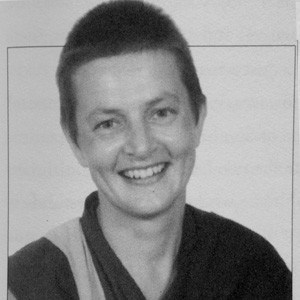
From Blossoms of the Dharma: Living as a Buddhist Nun, published in 1999. This book, no longer in print, gathered together some of the presentations given at the 1996 Life as a Buddhist Nun conference in Bodhgaya, India.
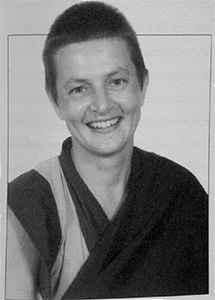
Bhikshuni Wendy Finster
The points of contact between Buddhadharma and Western psychology are many. Yet, we must be able to distinguish between the two and know how and when to use each one. I will not pretend to understand these topics with complete clarity, but will share my personal opinions and experiences, based on my training and practice as a clinical psychologist in community mental health, as well as my training and practice for twenty-two years in the Dharma. Others will have different opinions, and further discussion of these points will enrich us all.
All of us ordinary beings are, I believe, mentally unbalanced until we attain enlightenment. We are all deluded; we all have hallucinations of our own creation and believe in them, thereby creating our own little sphere of mental disturbance. From this perspective, only enlightened persons are totally mentally healthy, although bodhisattvas and arhats are well on their way. In essence, we are all a bit crazy; it is just a matter of degree.
A number of Dharma students, however, experience severe mental disturbance and unbalance at some time or another during their practice. In these instances, we must differentiate the two levels of reality: ultimate and relative. Ultimate reality and the ultimate wisdom that understands it concern the deeper mode of existence of phenomena, one that is not perceivable by our senses or our gross levels of mind. Relative reality concerns the objects and people we deal with on a daily basis. It is possible to become mentally disturbed only on a relative plane with the relative mind. It is impossible for the ultimate level of mind to become crazy. When people have some kind of difficulty, then, it is in relation to their ability to handle relative reality and to know the difference between an experience of ultimate reality and the relative plane in which they live their daily life. They are unable to differentiate between mental creations and beliefs, and the conventionally accepted external phenomenal world.
Many factors can trigger such disturbances. In my observation, some people have a certain hypersensitivity derived from past emotional or cognitive experiences, that predisposes them to mental imbalance. The use of drugs, recitation of particular mantras or too many mantras too quickly, or powerful meditation on the chakras and energies can tip the balance for such people. I also wonder if, for some people with certain personalities and energy, staying in silence for long periods and meditating without any discussion with a teacher is useful. Such forceful, sudden change from their usual way of living seems to cause tension that can trigger mental imbalance.
For example, once I was called to a meditation center where a twenty-one-year old Canadian man had become mentally disturbed. A number of Western students there were meditating under the guidance of a Burmese master. They lived in total silence except for five or ten minutes each day when they could speak about what was going on within them. I wonder if for people with a particular kind of energy, such long periods of silence accompanied by intense meditation may in fact trigger an energy explosion within them. Other students at the center had noticed that he had become withdrawn over the preceding days, but nobody even knew his name; nobody ever talked with anyone else. They felt sorry that they did not know his name and that something had been troubling him before the time he lost touch with what was going on.
In general, a person who later has mental difficulties during his or her meditation practice becomes unhappy and mentally agitated prior to the time he actually becomes dysfunctional. Then he develops fear and paranoia that can alternate with a feeling of superiority. He becomes confused and is unable to make sense of everyday things or to interact successfully with the everyday world. I have noticed that when other people in the environment treat this person in a supersensitive way, as if he were crazy, he learns that and becomes more uncontrolled. He begins to believe that he is in fact mentally disturbed and separates himself from others because of that feeling. How can we help a person in this situation?
If the person is obviously a danger to himself or others, without hesitation we should immediately take him for professional assessment and treatment. It is useful to act normally around the person, to treat him as though he is normal and things are as usual. We should talk about the way things are usually done, reminding and emphasizing how to behave on the practical plane. It is also useful for the person to be physically active, to do physical jobs such as gardening, taking care of animals, cleaning, walking in nature, or any job that requires a coordination of physical energy to produce a result. This helps the person to re-balance his sense of being in the world and to re-solidify his sense of self. We need to help him get a stronger sense of the ego. Sometimes we can say, “You are like this and that. You can do this and that very well,” and thereby remind him of his skills or personality characteristics.
It is tricky, but it is also useful to try to communicate with that part of his mind that can perceive the whole scenario as a drama being created and then played out with himself as the main protagonist. One aspect of the mind sees this whole drama, and if we can help him to find and communicate with that part of the mind, it has a settling effect on him. We can also place the person in situations with which he is familiar. For example, if he happens to be away from his usual environment, we can take him to a familiar environment-his home, the community shopping center-so he is near familiar things that will bring him back to his usual sense of self.
Getting stuck
Although we may not suffer from severe mental problems, at times all of us feel stuck in our practice. This can happen in a variety of ways. One is by having high expectations of quick achievement and thus pushing ourselves to practice long hours, which often results in frustration, stress, or illness. If we are in touch with our body and its energy, we can know when we are pushing too hard before it becomes an obstacle. Even if we think our level of intensity is good because we seem to be more concentrated, it can cause a reverberation in our body that can make us overly emotional or even physically ill. We must let go of our unrealistic expectations and have the determination to practice over a long time. The balance of mind and body is delicate and precious, and we should take care to nourish it.
Some students practice for years but do not seem to make much progress with some heavy personal characteristics such as resentment or anger. The Dharma has tools to deal with these, but it appears they do not use them. What is missing? I believe that most of the change we make due to Dharma practice occurs by having a strong student-teacher relationship. Thus, I encourage people who are not making headway with deeply rooted personally traits to work with a qualified teacher and develop enough devotion so that they can accept the teacher’s criticism and pressure to deal with that trait. If they do not have such a relationship with a teacher, I describe its benefits and suggest they try to find a good teacher with whom to work. If they do not want to do that, I encourage them to do work that would force them to face and correct that quality in themselves.
Sometimes people have a close personal relationship with a teacher and work on a daily basis with the teacher, yet do not seem to change. If a lay student, due to living in a Dharma center for many years, has lost perspective on the problems faced by others in society, I generally advise her to leave the center and live elsewhere for a while in order to experience reality in the bigger world. I encourage monastics to do purification practice and to balance their study, work, and meditation. Often we Westerners become too focused on one aspect, and this lack of balance makes us feel that we are not making progress. If we do not do retreat or have some inner experience of the Dharma, we do not feel that we are worthy sangha. Taking the time to do retreat enables us to consolidate our practice, and as a result, to experience the change within ourselves. This can carry us through the times of work and service for others.
Sometimes we are so black and white, so determined to study a particular text or do a certain practice, that we push ourselves, thus becoming anxious and stressed. We often do not notice the damaging effect of this self-applied pressure until it is too late to undo easily. Thus, before beginning a retreat or a period of intense study, people need to be aware that if they start feeling too tense, they should give themselves permission to disengage from that activity and relax their mind. Later, with a happy, relaxed mind, they can return to complete the activity.
Some Western centers now have confidential registration forms for participants in retreats or intensive courses in which they ask if one takes any medication or has ever been hospitalized for mental problems. Other questions could be added to help the teacher be aware of people with potential difficulties. The teacher or an assistant could also have a personal interview with participants prior to an intensive retreat in order to discuss some of these points.
Acting as a counselor in Dharma communities
When people in Dharma centers or monastic communities approach us for counseling, we must first determine whether the person wants advice regarding her Dharma practice and clarification of the Buddha’s teachings, or whether she wants counseling for a psychological problem. Differentiating these two is extremely important, and if the person’s issue is a psychological one, we should refer her to someone capable of giving the professional help she needs.
Because I am a psychologist as well as a nun, I have often been approached by Dharma students for help with personal psychological difficulties that they want to discuss with someone who understands the Dharma. However, as someone qualified in both Dharma and psychology, I believe it is far better not to mix roles with one person. As a monastic and a Dharma practitioner, my specialty and source of benefit is in terms of the Dharma. Therefore, I decline to enter into a therapy relationship with a Dharma student and refer them to a well-qualified therapist for help with their psychological problems.
If someone approaches us for help and we determine that it regards her Dharma practice and her way of handling the difficulty according to the Dharma, we are qualified as Dharma practitioners to give her Dharma advice. Before doing so, however, we have to create a situation conducive for giving such help. First, we must be calm and balanced, meaning that none of the three poisonous attitudes—confusion, anger, or clinging attachment—dominate or disturb our mind at that moment. We must give ourselves space to calm down, empty ourselves of our own preconceptions, and prepare for such an interview so that we can listen deeply and respond clearly. We can prevent pride from arising by recognizing that similar problems could occur in our lives while we remain in cyclic existence. Although we are temporarily in a position to offer advice to someone with difficulties, in fact we have the seeds of those same problems within us, and given certain circumstances and conditions, they could arise in our lives.
We must also ensure that the other person discovers her own answer, instead of giving her our answer. When we speak of refuge, there is outer refuge—the Buddhas, Dharma, and Sangha external to us. There is also inner refuge, our wisdom and compassion, the ultimate refuge being our own inner Dharma wisdom. Because we must enable this to grow in both ourselves and the other, our role is to help the person discover her own solution within herself. When she is able to do this, her self-confidence in growing her own Dharma wisdom and progressing along the path will increase. We must communicate optimism for change, letting her know that the potential for enlightenment is intact regardless of how disturbed her mind may be due to her habitual ways of thinking or acting.
As a Dharma counselor, we must remember that we are simply a cooperative condition for helping the other person grow; we are not a cause. We are not ultimately responsible for his growth, nor can we make him change. Understanding this and understanding karma prevents us from being over-involved and makes clear where responsibility lies.
When a person living in a community becomes mentally disturbed, we must set boundaries for acceptable behavior and ask people to leave if they are unable to comply. We need to do this with sensitivity and compassion by describing why we have community rules and why it is important that everyone follows them. If we must ask the person to leave the community, we explain, “Unfortunately, because you are experiencing some difficulties in this area, problems arise. If you live somewhere else and get help for that behavior so that you are able to deal with it, we are happy to welcome you back into the community again.”
In a community of one hundred or two hundred people, one disturbed person would probably not make too many ripples. But in our small and newly begun Western communities, one mentally disturbed person in a group of five or six will destroy the harmony of the group. Our understanding of compassion is incorrect if we think that we should not point out to a person what is expected of him, where his behavior has fallen short, and his need to get help. Not dealing straightforwardly and firmly creates a type of co-dependency in which we actually encourage a person not to change.
The interface of Buddhism and Western psychology
The relationship between Buddhism and Western psychological theories and techniques is an important topic concerning the spread of Buddhism in the West. Over the last ten years, many people have begun offering mixed or comparative courses that include some Dharma and some Western psychology. I doubt that it is possible to do this well unless one has equal expertise in both areas. Otherwise the points of comparison will not be at a deep level and will not be valid.
The factors making accurate comparison difficult are many. First, the Buddhadharma is a vast and profound system of knowledge. In addition, many types of Western psychology and philosophy exist, each with its own areas and specialties. One needs to be extremely careful before setting oneself up as one who can do a valid comparison. I have noticed that people who have not done serious study in Western psychology, and thus are not qualified to give comparative or mixed courses, are often asked to do so. These people may have read a few books and taken some experiential courses that awakened exciting personal insights, and in the process think they can create and teach a course in this. I find this quite surprising: I am a clinical psychologist and a Buddhist nun, yet I do not feel I can do justice to such a comparison or integration. Similarly, some psychologists, having gone to a few Buddhist retreats and read some books, believe they are qualified to teach meditation and Dharma to other psychologists or their clients. There are, however, generic forms of meditation that can be useful for introducing those in therapy to their inner world.
I personally find it interesting to look at the parallels between Buddhism on the one hand and Western psychology and philosophy on the other. However, I do not believe a Dharma center is the appropriate place for that exploration to take place. People can go to many other places in the West to attend psychology courses or support groups, or to hear lectures on mixed disciplines. When people go to a Dharma center, they should receive the pure Buddhadharma, which is a complete system guiding a person all the way to enlightenment. When it is taught purely, the essence and principles of Buddha’s teachings can be applied by the individual according to his or her particular context and needs. However, the Dharma teaching itself should not be changed according to the flavor of the month. We are extremely fortunate that the Buddhadharma has been maintained in its pure form and passed down through lineages in many countries for thousands of years. It would be a great pity if, through our generation’s carelessness, the Buddhadharma became polluted in the West by adding ideas from Western philosophy and psychology that appear to fit in.
However, Westerners who come to Buddhism do have different issues than the Asians who have held and passed the teachings on all these years. Due to our own issues, we Westerners may not be able to easily apply some of the Buddha’s teachings. To make the Dharma applicable in the West, then, we have to look at the society within which we grew up, how we were conditioned, and the ideas and values held as true in the West. For example, we were raised to be individualistic and to be enthusiastic consumers. Because of our cultural conditioning, we often create unrealistic expectations of both ourselves and others, and these generate frustration and anger when things do not turn out the way we wanted. I think these expectations are related to our yearning for perfection; and this yearning is a pitfall because when we start looking for perfection, we cannot find it. This causes us to judge ourselves harshly and feel guilty, and as a result, our self-esteem plummets. This surprises our Asian teachers; they do not realize the level of self-criticism and self-hatred that can arise in individuals raised in our culture. Westerners tend to feel fear, anxiety, and insecurity, which leads to competition, and this, in turn, produces a type of paranoia that underlies all our experience.
The conditioning we receive in the first seven years of our lives has great impact on us, affecting us on gross and subtle levels. The family into which we were born, the experiences we had at school, the values that were emphasized, and the expectations of the nation and culture all affect our outlook as adults. In the same way, children who grow up in Asia imbibe from the time they are small the belief that this is one of many lives and that offering to the sangha creates great merit. Although such concepts are alien to Westerners, they feel comfortable and are easily accepted by those who grew up in a culture with that prevailing norm. Exploring more deeply the effects of our conditioning could help us progress along the Dharma path. This should be done at a place that specializes in conventional mental health and personal development programs. If the personnel at the Dharma center feel it appropriate to offer such mental health courses themselves, the most appropriate way would be to offer the courses in other locations and perhaps set up a subsidiary branch of the Dharma center to run the courses in those places. I strongly feel that when people go to a Buddhist center, they should know what they will receive, and that should be the Buddhadharma, not somebody’s compilation of bits and pieces of this and that mixed in with the Dharma.
Misunderstanding the Buddha’s teachings
In some cases, the Buddha’s teachings have been misused or misunderstood in the West. One example is spiritual materialism, a term coined by Trungpa Rinpoche. In gross form, this occurs, for instance, when Dharma students take on Tibetan cultural trappings. They wear Tibetan clothes, adopt Tibetan mannerisms, and so on. It can become quite a trip. We should be careful to distinguish between the Buddhadharma and the cultural context within which it has developed, and then be sure that we grasp the essence of the Dharma without getting caught up in paraphernalia appropriate in its Asian cultural context. We must make an effort, through our own individual practice, to separate the grain from the chaff. Within our own cultural context, the wisdom the Buddha taught can be included in the disciplines of philosophy, psychology, theology, and contemplative studies.
In a subtler form, spiritual materialism occurs when we use the Dharma to reinforce our desires, pride, or political views. For example, when we learn something and are able to teach others, we may become smug, self-satisfied, and arrogant as a result. Using the Dharma in this way is like taking poison.
A second way in which we Westerners tend to misinterpret the Dharma teachings is by believing that all feelings—or at least the troublesome ones—should be repressed or pushed away. I think this is done out of a basic dislike for oneself and self-hatred, arising due to the strong influence of Cartesian dualist thought in the West. Our language and the words we use strongly affect our ideas, philosophy, way of thinking, and what we feel is possible. We have a cultural heritage of a very powerful dualism between good and bad, with no gray area in-between. Our perfectionism comes from wanting things to be perfect in an absolute way. Asian cultures, on the other hand, do not put such stress on the extremes of good and bad, right and wrong, and see things as a gradation. In our culture, we do not have this perspective and thus can easily become inflexible.
An example of this inflexibility is a Dharma student intensely reciting mantras, while walking with prayer beads in hand in a Dharma center. Someone stops to ask her for assistance, but she cannot bring herself to break that intense concentration to help the person in front of her. Another example is someone who has studied the Dharma for years, learned all the outlines of the philosophical treatises, and passed examinations on these topics. However, his daily life actions are out of control. At a number of centers the comment has been made that non-Dharma people are often much kinder than people studying at the center. This should make us reflect: Are we truly practicing the Dharma? Or are we misusing it to fulfill our cravings or repress our problems, and in the process poisoning not only our practice but also the purity of the Dharma in the world?
An excellent yardstick for assessing our Dharma practice is to check if we are becoming happier. If we find that we are not happier in our daily life, then we are not practicing the Dharma correctly. We must be either misinterpreting or misapplying what the Buddha taught. No matter what wonderful high realizations we think we may have attained, unless we are able to translate them into kitchen sink reality and talk about them in very basic terms, we are off with the birds. One of my teachers told me, “If you do retreat and think you have had fantastic experiences and attained great realization yet you are not able to bring those experiences into your reality on earth on a day-to-day basis, you don’t have any realizations. You’re just on another ego trip.”
It sometimes happens that a teacher, director, or other person in a position of responsibility in a Dharma center behaves erratically. When this happens, it is important to maintain our discriminative wisdom and to accurately discern right and wrong behaviors, whether they are in ourselves or in someone in a position of responsibility. In the latter case, if we discover that something inappropriate has been said or done, we need to make it known in a skillful way. We need to dissociate ourselves from that behavior, and if necessary, we may have to leave the situation. It is important to contemplate the four reliances:
- Rely on the doctrine and not on the person teaching it
- Rely on the meaning and not on the words
- Rely on sutras of definitive meaning and not on those of interpretable meaning
- Rely on the exalted wisdom directly perceiving reality and not on ordinary consciousness
Our present opportunity to learn the Buddhadharma and our freedom to practice it are unbelievably precious. Confidence in the validity of the teachings helps us to practice enthusiastically. The obvious method to determine this validity is to put the teachings into practice in our daily lives in a correct and gradual manner. If we observe results occurring with our physical, verbal, and mental actions moving in a more positive direction, we know the teachings work. Even though it is unwise to expect instant happiness and wise to be prepared to practice over many lifetimes, we should still be able to notice clear changes in our mental attitudes and our actions from year to year. Slowly our kind thoughts and compassionate actions will increase, benefiting ourselves and all those around us. We will make the heart of the Buddha’s teaching come alive by following his essential instructions:
Do not commit any unwholesome action.
Enjoy doing perfectly constructive actions.
Subdue your own mind completely—
This is the teaching of the Buddha.

Wendy Finster
Born in Australia, Bhikshuni Wendy Finster has an M.A. in Applied Psychology, and is a clinical psychologist with both clinical and academic research interests. A student of Lama Yeshe and Zopa Rinpoche, she received sramanerika vows in 1976 and bhikshuni vows in the late 1980s in Taiwan. She lived and taught in Buddhist centers in Australia and Italy. She currently lives in Australia where she teaches the Dharma, is a psychotherapist, and conducts research on treatment modalities for people with chronic health problems.