The history of the bhikkhuni sangha
The history of the bhikkhuni sangha
 Bhikkhuni Dhammananda
  Blossoms of the Dharma
  Dec 28, 1999
From Blossoms of the Dharma: Living as a Buddhist Nun, published in 1999. This book, no longer in print, gathered together some of the presentations given at the 1996 Life as a Buddhist Nun conference in Bodhgaya, India.
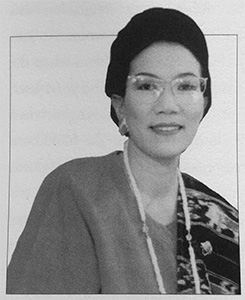
Dr. Chatsumarn Kabilsingh (now Bhikkhuni Dhammananda)
The bhikkhuni order was established at the time of the Buddha and exists until this day. For centuries, ordained women have practiced, realized, and upheld the Buddha’s teachings, benefiting not only themselves but also the societies in which they lived. Here I will give a brief history of the order, including its spread to other countries, and discuss interesting points in the Vinaya.
When King Suddhodana, the Buddha’s father, passed away, his stepmother and aunt, Mahapajapati, together with five hundred royal women, went to the Buddha who was in Kapilavatthu to request permission to join the sangha. The Buddha responded, “Do not ask so.” She repeated the request again three times, and each time the Buddha simply said, “Do not ask so.” Nobody knew what he was thinking, and it is not clear why he refused. However, that the Buddha hesitated to accept her into the sangha has been interpreted by some to mean that the Buddha did not want women to join the order. Therefore, some people think that it was no problem when the bhikkhuni order died out in India approximately one thousand years later. In our study of the historical development of the bhikkhuni sangha, when others quote from the texts to prove authoritatively that the bhikkhuni order cannot be restored today, we have to be equally conversant and fluent in quoting from the texts to prove that it can.
The Buddha left Kapilavatthu and went to Vesali, which was many days’ journey on foot. By that time, Mahapajapati had shaved her head and put on the robes. Together with five hundred royal women who had done the same, she walked to Vesali, thus demonstrating women’s determination to be ordained and follow the Buddha. Once there, she sat by the entrance to the vihara, weeping, her feet swollen and bleeding from the journey. Ananda, the Buddha’s cousin and attendant saw the women, spoke with them and learned of their problem. He approached the Buddha on their behalf saying, “Mahapajapati, your aunt and stepmother, is here, waiting for you to give her permission to join the order.” Again, the Buddha said, “Do not ask so.” Ananda tried another tact, “After all, your aunt is also your stepmother. She was the one who fed you with her milk.” The Buddha still refused. Then Ananda asked, “Are you not giving permission because women do not have the same spiritual potential as men to become enlightened?” The Buddha said, “No, Ananda, women are equal to men in their potential to achieve enlightenment.” This statement opened a new horizon in the world of religion in general at that time. Previously, no founder of any religion had proclaimed men and women to have equal potential for enlightenment.
Then, the Buddha said he would give women permission to join the order if Mahapajapati would accept the eight gurudhamma—eight important rules—as the nuns’ garland to decorate themselves. Mahapajapati did. One of these rules is very annoying to many Western Buddhist scholars; it says that a nun ordained even a hundred years must bow to a monk ordained but one day. By Western standards, it seems as if nuns are being suppressed, but there is another way to look at this. The Vinaya recounts the story of six monks who lifted up their robes to show their thighs to the nuns. When the Buddha learned about this, he made an exception to that rule and told the nuns not to pay respect to these monks. A nun, then, does not have to bow to every monk, but only to a monk who is worthy of respect. We need to understand each gurudhamma properly, for the Buddha always made exceptions after the general rule was established.
One of the gurudhamma mentions sikkhamanas, probationary nuns who train for two years in preparation to become bhikkhunis. It says that after a probationary nun has trained with a bhikkhuni for two years, that bhikkhuni preceptor has the responsibility to fully ordain her. However, when the Buddha ordained Mahapajapati, there were no probationary nuns. He ordained her directly as a bhikkhuni. So how do we explain that within the eight important rules, one of them states that before becoming a bhikkhuni, a woman must be a probationary nun? In addressing this, an English monk told me he believes that the gurudhamma arose much later on, and were shifted to the forefront by the monks who were the historical recorders. These eight important rules very clearly put nuns in a position subordinate to monks, so would have been to the monks’ advantage for the recorders to attribute them to the Buddha.
The Buddha may have hesitated to accept women into the order for several reasons. One might have been his compassion for the nuns, especially his aunt, for the bhikkhus and bhikkhunis received their food by collecting alms in the villages. Sometimes they received very little, just a handful of rice, a piece of bread, or some kind of vegetables. Imagine the elderly queen Mahapajapati and five hundred royal women going out begging. It would have been almost impossible because they had led such comfortable lives in the palace. Maybe out of compassion the Buddha did not want these women to face such hardship.
In addition, at that time there were no monasteries. The monastics lived a very difficult lifestyle, dwelling under trees and in caves. Who would give this group of wandering women dwelling places? Moreover, who would teach the nuns? They could be ordained, shave their heads, and put on robes, but if they did not receive an education and training, they would be just like any wanderer in India at that time. No plan for educating them existed yet. Later, it was established that the bhikkhu sangha could assign a few excellent monks to teach the nuns.
Furthermore, the Buddha had already received criticism from lay people that he was destroying the family unit. To accept five hundred women into the order implied that he was going to destroy five hundred families because women were the heart of the family. However, later the Buddha learned that the husbands of these women had already joined the order. Thus by ordaining the women, he would not break up those families. The Buddha must have thought through all these issues, and upon realizing that the problems could be overcome, he accepted the nuns into the order.
It is also possible that he had never thought about women joining the order prior to Mahapajapati’s request because in ancient India, women never left household life. In fact, it was unthinkable for women to be on their own at that time. Even nowadays in India, women seldom leave the family. But since the Buddha knew that enlightenment was a possibility for all human beings, he opened the door for women to be ordained. This was a revolutionary step given the social climate at the time.
Thus the bhikkhuni sangha was formed about seven or eight years after the bhikkhu sangha. I see this as one of the reasons the Buddha made the bhikkhuni sangha subordinate to the bhikkhu sangha. They are subordinate in the sense of being younger sisters and elder brothers, not in the sense of being masters and slaves.
It was recorded that just after admitting women into the sangha, the Buddha said, “Because I have accepted women into the order, Buddhadhamma will only last five hundred years.” I view this statement as a reflection of the mentality of the monks who first recorded the Vinaya in written form in Sri Lanka 400-450 years after the Buddha’s parinibbana. These monks apparently did not agree that women should join the order. Some Western scholars think that this statement was later attributed to the Buddha but was not really his. As we see, over twenty-five hundred years have gone by, and not only is Buddhism still prospering in Asia but it is also spreading to the West. The prophecy saying that the Buddhadhamma would last only five hundred years because women joined the sangha is invalid.
Questioning the authenticity of certain passages in the Buddhist scriptures is a delicate issue, and we have to be very careful. How can we prove that everything was passed down exactly as the Buddha spoke it? On the other hand, isn’t there danger in saying that certain passages are later interpolations? I become suspicious only when a passage does not correspond with the spirit of the main core of the Buddha’s teachings. In general, we have to trust that the Indian monks had accurate memories and be grateful to them for preserving and transmitting the texts. The Buddhist monks were meticulous in preserving the teachings and handing them down. In Christianity, different men wrote the Four Gospels and they did not confer among themselves, while the Buddhist monastics held councils to compile and systematize the Buddha’s teachings, during which they checked each other’s information. The first council was held just after the Buddha’s passing and five hundred arhats attended. The second one occurred one hundred years after that, with seven hundred monks coming together to recite the agreed upon body of knowledge.
The relationship between the bhikkhu and the bhikkhuni sangha
As we would expect, the monks treated the nuns in the same way that men in general treated women in Indian society at that time. When women joined the order, the monks expected them to clean the monastery and to wash their dishes, robes, and rugs. Lay people noticed this and reported it to the Buddha, saying that these women wanted to be ordained so that they could study and practice the teachings, but now they had little time for these. In response, the Buddha established rules for monks regarding how to treat nuns. For example, he established precepts forbidding monks to ask bhikkhunis to wash their robes, sitting cloths, and so on.
The Buddha also protected nuns from being taken advantage of by lax monks. One 120-year-old bhikkhuni went on almsround each morning, walking the long distance from the monastery to the village. She received food and took it back to the monastery in her almsbowl. At the entrance to the monastery waited a young monk, who was too lazy to walk into the village for alms. Noticing that his bowl was empty, she offered her food to him. It was enough for only one person, so she then had nothing to eat for the rest of the day.
The next day, he waited for her again, and again she offered him her food. On the third day, after having not eaten for three days, she went to the village to collect alms. A carriage owned by a wealthy supporter of Buddhism passed very near to her, and as she stepped out of its way, she fainted and fell to the ground. The rich man stopped to help her and discovered that she fainted because she had not eaten for three days. He reported the situation to the Buddha and protested that a nun had been treated that way by a monk. The Buddha thereby established the precept prohibiting monks from taking food from bhikkhunis. Of course, understanding the spirit of each precept is important; this one does not mean that nuns having plenty of food should not share it with monks.
Nuns at the time of the Buddha had equal rights and an equal share in everything. In one case, eight robes were offered to both sanghas at a place where there was only one nun and four monks. The Buddha divided the robes in half, giving four to the nun and four to the monks, because the robes were for both sanghas and had to be divided equally however many were in each group. Because the nuns tended to receive fewer invitations to lay people’s homes, the Buddha had all offerings brought to the monastery and equally divided between the two sanghas. He protected the nuns and was fair to both parties.
The first council and the bhikkhuni patimokkha
Ananda, the Buddha’s attendant, played a very important role in relation to the nuns. He was well liked by the nuns and visited many nunneries in order to teach them. Because he heard almost all of the Buddha’s teachings and had a phenomenal memory, he was a key person at the First Council when the teachings were recited and collected.
That some monks had not been happy that the Buddha allowed women to join the order had never been expressed while the Buddha was alive. It first came out at the First Council, which five hundred male arhats attended about three months after the Buddha’s parinibbana, his passing away. Before the actual recitation of the Buddha’s teachings, they told Ananda he had made eight mistakes and forced him to confess to these. One was that he had introduced women into the sangha. Ananda responded that he did not see that as a mistake, nor did he violate a precept in doing so. However, in order to avoid causing schism in the sangha so soon after the Buddha’s parinibbana, he said that if the monks wanted him to confess, he would do so.
I have doubts that only men—five hundred male arhats—were at this council. On uposatha days every new and full moon, the bhikkhunis would recite their Patimokkha Sutta apart from the monks. I believe that technically, it could not be possible for the monks to recite the Patimokkha Sutta of the nuns, and so bhikkhunis must have been present at the First Council. The recorders, who were all monks, may not have thought it important to mention their presence. Some monks have been kind enough to speak about this point: recently, a Sri Lankan monk told me that he too did not think that only men attended the First Council.
The bhikkhuni order in India and its spread to other countries
Both the bhikkhu and bhikkhuni sanghas existed until the eleventh century A.D. when the Muslims attacked India and wiped out the Buddhist monasteries. In 248 B.C.E., about three hundred years after the passing away of the Buddha, King Asoka the Great came to the throne. A great supporter of Buddhism, he sent Buddhist missionaries in nine different directions. His own son, Mahinda Thera, traveled to Sri Lanka to teach the Dhamma and establish the bhikkhu sangha. Princess Anula, the sister-in-law of King Devanampiyatissa of Sri Lanka, converted to Buddhism when he did. After listening to the teachings of Mahinda Thera, she became a stream-enterer and asked him if she could join the sangha. Mahinda Thera told her that dual ordination by both the bhikkhu and the bhikkhuni orders was necessary to become a bhikkhuni. At least five bhikkhunis must be present to form a sangha, and the preceptor must have at least twelve years standing as a bhikkhuni in order to give the precepts. He suggested that she ask King Devanampiyatissa to send a messenger to India to request King Asoka to send his daughter, Sanghamitta Theri, and some other bhikkhunis to give the ordination. Sanghamitta Theri, a princess, had given up royal luxury to practice the Dhamma. Well versed in the Vinaya, she also taught the Dhamma. Thus, upon request from the king of Sri Lanka, King Asoka sent Sanghamitta Theri and other bhikkhunis to establish the nuns’ order in Sri Lanka. With her, King Asoka also sent a branch of the bodhi tree from Bodhgaya. She and the other Indian bhikkhunis, together with the bhikkhu sangha, ordained Princess Anula and other Sri Lankan women, thus establishing the bhikkhuni sangha in Sri Lanka, the first one outside India.
Hundreds of women wanted to receive ordination when Sanghamitta Theri arrived, and King Devanampiyatissa set about building nunneries for them. The bhikkhuni sangha prospered there along side the bhikkhu sangha, until both the orders were wiped out when the Chola King from Southern India attacked Sri Lanka in 1017 A.D. The next Buddhist king who came to the throne searched the entire island and found only one male novice left. To revive the sangha in Sri Lanka, he sent envoys to Burma and Thailand to request the kings there to send monastics to give ordination in Sri Lanka. However, since Thailand never had the bhikkhuni order, no bhikkhunis could be sent, and the Sri Lankan king was able to revive only the bhikkhu sangha.
The chinese nuns
From the second century A.D., Chinese men were ordained as monks. In the early fourth century, one Chinese woman, Ching-chien, was very enthusiastic to become a bhikkhuni. Although she received sramanerika ordination from a monk, she did not receive bhikkhuni ordination, because the Chinese monks said that dual ordination was necessary. Later, a foreign monk, T’an-mo-chieh, said that insisting women receive dual ordination was not practical in a land where no bhikkhunis were present. He and a bhikkhu sangha ordained Ching-chien, whereupon she became the first bhikkhuni in China.
Later the Chinese people invited bhikkhunis from Sri Lanka to come to China. Some came, though not enough to give the bhikkhuni ordination. These nuns remained in China to study the Chinese language, while the ship owner returned to Sri Lanka to invite enough bhikkhunis to come to China to give the ordination. The following year, the ship brought many bhikkhunis from Sri Lanka, including one named Tessara. Together with the Sri Lankan bhikkhunis who had arrived earlier, they gave ordination to more than three hundred Chinese women at Southern Grove Monastery. The Indian monk Sanghavarman and the bhikkhu sangha also gave the ordination, making this the first dual ordination of bhikkhunis in China.
According to the Theravada Vinaya found in Southeast Asia—and this is different from the Dharmagupta Vinaya found in China—a bhikkhuni preceptor can give ordination to only one nun every alternate year. Nowadays some people question the validity of the Chinese ordination because many nuns are ordained together. However, when we study the spirit of the precept, it is evident why initially the number of disciples each bhikkhuni preceptor ordained was limited. First, for safety reasons, the nuns could not live in the forest, but had to stay in dwellings, and there weren’t enough of these. Secondly, the number of Indian women ordaining was so great that the bhikkhuni sangha did not have enough teachers to train them. One way of limiting the population of nuns was to limit the number of women each preceptor could ordain. In China, the situation was different, and it was practical to ordain many bhikkhunis at once.
Earlier this century, many huge monasteries existed in Mainland China. Before the communist takeover, the monks thought they were strong and would be able to survive. However, when the nuns heard that China might be taken over by the communists, they started to migrate to Taiwan. They brought their resources along with them, began to build nunneries, and became well settled in Taiwan. When the communists took over the mainland, the monks realized that they could not survive under the communist rule, so they fled to Taiwan in a hurry and arrived with almost nothing. The nuns’ sangha gave them considerable help as they became reestablished. The monks remember their kindness, and thus the nuns in Taiwan are well respected by both the monks and the lay Buddhists. The nuns far outnumber the monks, are well educated, and have strong communities with their own abbesses.
Taiwan is a stronghold for bhikkhuni ordination; the nuns there are progressing very well. Venerable Master Wu Yin is noted for the high level of secular and religious education of her nuns. Bhikkhuni Cheng Yen received the Magsaysay Award for starting a hospital for poor people and a medical school. Her charitable organization is so popular in Taiwan that one has to be on a list to do volunteer work there! Another nun, Venerable Hiu Wan literally bought a mountain and built a college for engineering. Slowly she is introducing Buddhist studies in that college. During my visits to Taiwan, I have been very impressed with the nuns, and think that countries that are currently without the bhikkhuni lineage could bring it from Taiwan. However, due to some problems in the past, a few bhikkhunis in Korea and Taiwan are not very willing to train foreigners as nuns. They say that the Western nuns were too individualistic, making training difficult. It is hard for Chinese and Korean nuns to understand the Western mentality, so steps need to be taken to bridge the gap.
The bhikkhuni ordination
After the Buddha’s passing, several Vinaya schools arose. Considering that the Patimokkha Sutta in each school was passed down orally for many centuries and that the schools developed in very disparate geographic areas, they are remarkably similar. Naturally, minor differences occur in the number of precepts and in their interpretation. The Chinese follow Dharmagupta Vinaya, which is a sub-branch of Theravada, the tradition followed in Thailand, Sri Lanka, and other Southeast Asian countries. The Tibetans follow Mulasarvastivada.
I am not sure which of these Vinaya lineages the Sri Lankan bhikkhunis brought to China. More research needs to be done to establish this important point. Nowadays there is much discussion about women from countries such as Thailand, Sri Lanka, and Tibet receiving the bhikkhuni ordination from the Chinese community and bringing it back to their own countries, where the lineage of bhikkhuni ordination does not exist at present. However, in general the monks in Sri Lanka and Thailand do not accept the bhikkhuni ordination of the Chinese tradition because it is considered to be from a different Vinaya lineage than theirs. I do not see this as important because all the traditions follow the same general body of Vinaya.
The Buddha said that for Buddhism to flourish in a country, the four groups of Buddhists are needed: bhikkhus, bhikkhunis, laymen, and laywomen. Thus it would be advantageous to bring the bhikkhuni sangha to Buddhist countries where it is not currently present. I think two types of people talk about the possibility of bhikkhuni ordination: the ones who say “no” to it cite a quote from a text and say, “You see, the Buddha never wanted women to join the order.” Those who say “yes” to it cite a quote from the same text and say, “You see, it is possible, if you understand the spirit of the precepts.” However, indications of change are slowly beginning to appear. For example, in 1998 some prominent Theravada monks participated in a bhikkhuni ordination given by a Chinese master in Bodhgaya, India. Twenty Sri Lankan nuns took the ordination at this time.
Nuns have committed their lives to the Dhamma, and they must not be shy to show others what a positive influence they can have on society. The Buddha’s last words were, “Be beneficial to yourself; be beneficial to others.” To win the support of society, the bhikkhuni sangha can show that through their Dhamma practice, they benefit themselves by becoming peaceful and happy. They can show that they benefit others by helping them to become peaceful as well. If the nuns come forward and show their capabilities, society will support them. Only then will the conservative monks understand that it is worthwhile for women to join the order. They will see that nuns can help solve many problems and serve others in ways that men cannot do.
Approaching the Vinaya
Initially, only a small number of monks and nuns existed, and since most of them were enlightened, there was no need for a system of precepts. Later, the sangha grew much larger and its members came from more diverse backgrounds. The sangha needed a common set of guidelines for behavior, and thus the Vinaya came into existence. Theravada texts mention ten reasons why the sangha should follow the Vinaya. I have grouped these ten into three major purposes of the Vinaya:
- To uplift one’s own body, speech, and mind. The Vinaya helps each person who joins the sangha to channel his or her physical, verbal, and mental actions in a virtuous direction.
- To support harmony in the sangha. The sangha consists of people of different castes, social classes, genders, racial and ethnic backgrounds, habits, and values. Without following the Vinaya, such a diverse group could not be harmonious.
- To confirm the belief of those people who are already Buddhists and to gladden the hearts of those who have not yet become Buddhist. The way an ordained person walks, eats, and speaks influences how people view the Dhamma and the sangha. It helps the general population when they see kind, polite, non-aggressive people. It enhances the faith of Buddhists and helps those who are not yet on the path to come to the path.
Reflecting on these three purposes, we see that the Vinaya is not meant to benefit solely the individual monastic but also the community. For example, if the bhikkhunis follow the Vinaya properly, it will make waves. It will influence the countries that do not have ordained nuns, and the nuns will in turn be appreciated and respected by the larger population.
The Buddha was not a legalist. Each precept was established in response to a specific event. When monastic made a mistake or acted in a way that the lay people found bothersome, it was brought to the Buddha’s attention, and he established a precept to guide future disciples in similar situations. In this way, the list of precepts was developed gradually.
Even the Buddha’s action was the cause of at least one rule. When the Buddha ordained his son, Rahula, as a novice, the Buddha’s father complained. His father was sad because his only son, the Buddha, had become a monk, and now his only grandson, Rahula, was leaving the family life. His father asked the Buddha in the future to ordain young children only with the consent of their parents or guardians, and the Buddha set up a precept in this regard.
It is helpful to divide the material found in the Buddhist teachings into two parts: the teachings dealing with worldly life and those concerning the development of the mind and mental faculties. The latter teachings pertain to everyone. For example, enlightenment is a quality of the mind. It is not related to one’s gender, race, and so forth.
On the other hand, the teachings concerning worldly life deal with society and the world, and therefore sometimes speak of the behavior of men and women differently. These teachings can be subdivided into two categories. One corresponds to what was practiced in Indian society at that time. Certain ancient Indian social values were taken into Buddhism, because the Buddhist community was not separate from the general Indian society at that time. Of course, some of these values concerned the position of women. For example, women were to be submissive to men. Spiritual enlightenment was not spoken of in conjunction with women. In India, the only path through which a woman could achieve salvation was bhakti or devotion to her husband.
The second category of teachings concerning worldly life shows gender equality. The Buddha came forward and said that a woman can achieve enlightenment. She can be single and does not have to have children. If we look at the formation of the nuns’ order and their precepts in the social context of ancient Indian society, we see that the Buddha was ahead of his time when he validated women’s spiritual abilities and uplifted their position. By allowing women to be ordained, the Buddha gave women a vision and an unprecedented opportunity that no other religion at that time could offer.
Thus, two types of material are in the Tripitaka, the Buddhist Canon. One clearly supports women. The other seems discriminatory against women due to the incorporation of Indian social values. When we can distinguish between these two types, we can look at Buddhism in a clearer light.
Before the Buddha passed away, he allowed minor precepts to be lifted. However, the elders at the First Council could not decide which precepts were major and which ones minor. As a result, some of the elders proposed keeping the entire body of precepts without changing any.
The first category of precepts, parajika, means defeat. If one transgresses any of them, one is defeated in the sense that one no longer is a monastic. The sangha community does not expel that person. Rather, by one’s own action one is defeated. Interestingly, monks have four defeats whereas nuns have eight. At the time nuns joined the order, the four defeats for monks were already in existence. The other four were added due to actions of the nuns.
For example, the fifth defeat for nuns says that if a nun feels sexual pleasure from a man stroking upward, lightly touching, squeezing, or holding her in the area from the collar bone down to the knees, she is defeated and is no longer a nun. At first, I did not understand why these actions were serious enough to be considered a parajika. Having thought about it for a long time, I see that if both the man and the bhikkhuni feel sexual pleasure, it is like lighting a match. The fire will burn everywhere. If that kind of touching was allowed and sexual pleasure arose, it would be difficult for the two people to stop. That is why the precept is so serious.
How nuns can help society
Nuns help society simply by being a good example of people who are unpretentious and live in the spirit of non-harmfulness. Aside from their spiritual studies and practice, nuns can also directly benefit society in other ways, one of which is to become involved in issues concerning women. For example, bhikkhunis can help with problems regarding abortion, prostitution, menopause, and other issues that women prefer to discuss with other women. Nuns can also help unwed mothers, many of whom do not want to have an abortion but do not know how to handle the situation. In Thailand, we have just opened a home for women with unwanted pregnancies, so they can avoid abortion and receive the care they need.
Nuns can also help women who suffer after having an abortion. Although as Buddhists, we discourage abortion, some women undergo them. Afterwards, some of these women have regret and confused emotions about their actions. We need to help them accept that this act was committed, teach them means to purify its karmic imprints, and encourage them to go forward in their lives without the burden of a guilty conscience. Some Buddhist women in the West have begun to create rituals to help these women do this.
The nuns’ order has great potential, for whatever nuns do will have a ripple effect for Buddhist women all over the world. My hope is that the nuns will use their collective energy to help each other, to contribute to society, and to preserve and spread the precious teachings of the Buddha.

Bhikkhuni Dhammananda
Bhikkhuni Dhammananda is a Thai Buddhist nun. On February 28, 2003, she received full bhikkhuni ordination in Sri Lanka, making her the first Thai woman to receive full ordination as a Theravada nun in the Dharmaguptaka ordination lineage. She is abbess of Wat Songdhammakalyani, the only temple in Thailand where there are fully ordained nuns. (Bio and photo from Wikipedia)