The nuns in Korea
A strong tradition adapting to change
 Chi-Kwang Sunim
  Blossoms of the Dharma
  Dec 28, 1999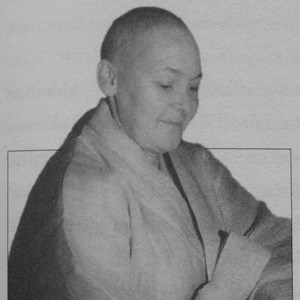
From Blossoms of the Dharma: Living as a Buddhist Nun, published in 1999. This book, no longer in print, gathered together some of the presentations given at the 1996 Life as a Buddhist Nun conference in Bodhgaya, India.
Chi Kwang-Sunim
As a Western Buddhist nun, I feel very fortunate to have lived in Korea and trained in this tradition for many years. Having hundreds of years experience, the Korean bhikshunis have established a systematic, effective way of training new nuns. They begin with a novice period, progress to sutra study schools, and go on to meditation halls or other vocations of their choosing. The monastic life here is inspiring, although, as in other Asian countries, it is undergoing change due to the country’s modernization and developments in the predominant Chogye Order.
To understand Korean Buddhism and monastic life, it is helpful to remember that many influences, spanning over a thousand years, have brought Buddhism to where it is today. These include five hundred years of Confucian law, as well as Taoism, shamanism, and animism, which are still practiced in many temples. In recent years, Christianity also has influenced some city temples, which now have choirs, Sunday schools, and Christian-style religious services. Over time, Korean Buddhism and Korean nuns have absorbed these influences and evolved with their own unique flavor.
The nuns’ communities are independent from the monks’, although sometimes they reside on the same mountain. However, the monks and nuns may attend formal ceremonies, communal events, Dharma talks, ordination ceremonies, and funerals together at a large temple. From time to time abbots and abbesses come together for annual training periods and discussion of the events at their temples. Apart from these instances of sharing, the nuns live separate, self-sufficient lives, with their own supporters, training schools and meditation halls, in thousands of temples varying in size from small hermitages to very large temples. They even have their own bhikshuni masters and “family” lineages. In the latter, disciples of the same master are “sisters,” nuns who are colleagues of their teacher are “aunts,” and so on.
The monks and nuns have similar life styles, temple organizations, robes, sutra schools, and meditation halls, although the nuns’ four-year sutra schools are more developed than those of the monks. Because of this, the monks generally show respect for the nuns, especially those who are elder or positions senior to their own. The nuns also have a very strong meditation order, where in over thirty-five bhikshuni meditation halls, twelve hundred or more nuns practice meditation almost continuously throughout the year.
The lineage of Korean bhikshunis is not completely clear. Recently while staying in Chon Yong Sa temple in Seoul, I discovered its old history log listing the unbroken lineage of abbesses. Queen Son Tok founded the temple 1,350 years ago, when she, her family, and servants became bhikshunis and resided here. Also, in Chong Yarng Sa Temple in Seoul, an unbroken lineage of bhikshunis continues to this day. Records in Buddhist libraries reveal descriptions of early ordinations even prior to this period and tell of the transmission of the Korean bhikshuni ordination to Japanese nuns. Many stories, too, have been passed down about various queens, many of whom became bhikshunis, and their great works to support the Dharma. It is suspected that although the bhikshuni order did not die out during the Confucian rule or the Japanese occupation, the ordination procedures for both monks and nuns were simplified.
Older nuns speak of their teachers and their teachers’ lineage, and some nuns in the last fifty years have been considered great masters, although little is written about their teachings or lives. One great bhikshuni told me, “If ever you become enlightened, don’t let anyone know, because you will have to spend the rest of your life having to prove it.” We are often told not to discuss our practice too much, but to let it blossom in our clear and compassionate actions. We should confide only in a trustworthy teacher who can guide our practice and actions, so that we are not caught in thoughts and experiences even of enlightenment. However, this makes me wonder if nuns throughout history have not been written about due to their silence and humility!
Nowadays, the most senior bhikshunis are generally well known. They preside over the main rituals and ordinations and are the masters of their lineages or heads of major temples, sutra schools, or meditation halls. Sometimes they are simply known for being a devout, dedicated bhikshuni and may or may not have exceptional abilities. Not all of the senior bhikshunis have many disciples, but they usually are part of a large “family” lineage, with many younger nuns following in their footsteps. The products of their work are found in the temples, sutra schools, and meditation halls they have constructed, as well as in their Dharma teaching, translation work, and the role model of monastic life they set.
The training of a novice
The training of a novice takes from six months to one year. During this time a woman is not yet a nun. Her head is not shaven—although her hair is cut short—and she may leave the temple at any time. In this period, she has the opportunity to choose her teacher, though often she will do this shortly before she ordains. However, some women come with knowledge of or commitment to a teacher in this or another temple. During these first six months, her training is not in the hands of her teacher, but in those of the kitchen supervisor or other senior nuns who guide her through her novice period. She works in the kitchen, serves the nuns in her temple, and becomes familiar with monastic life. After she has learned the basic chanting and monastic deportment and has undergone long periods of bowing and repentance daily, she is tested for about one month. She needs to have a health certificate and is checked for physical ailments. In addition, her personal history is examined; if there is any major flaw in it, she may not become a nun of the Chogye Order. After completing this examination, she receives the sramanerika ordination and returns to her teacher, where she spends another year.
During this next year, she serves her teacher and prepares for the examination to enter a sutra school, for which she needs to know some Chinese characters and to memorize basic texts such as Admonitions to Beginning Students. Written twelve hundred years ago by Master Chinul (Bojo-kuksa), it teaches both monks and nuns the discipline of a newly ordained monastic: how to walk, act, and speak with others; the importance of respecting one’s seniors and helping one’s juniors; and so on. Once she has learned to live by this basic standard, she begins to study other sutras and prepares to enter a monastic training college.
Sutra schools
Both monks and nuns have established colleges where the ordained train and study. I spent only one year in Un Mun Sa temple, where my teacher, Myong Song Sunim, has been the abbess and senior lecturer for twenty years. Here I experienced the complex, yet inspiring community life of 250 nuns. Only five major sutra schools, with 150 to 250 nuns each, exist in Korea, although there are several smaller ones. If a nun does not get into one of the main sutra schools, where it is difficult to be accepted, she can go to a smaller sutra school or try to enter a year later, after receiving further training from her teacher. The first year students vary in age from twenty to forty-five. Some nuns may stay for several years with their teacher before going to the sutra school, and some older nuns may bypass the sutra school and go directly to a meditation hall.
Training in the sutra schools is rigorous. The students eat, sleep, and study in one room. Their main teacher lectures about three hours a day, with the nuns following the text in Chinese characters, which requires several hours of preparation. Special Dharma lectures are given weekly by visiting teachers, along with various other teachings in the arts, languages, and music. In addition, a work period is scheduled for two or three hours a day, during which the nuns look after the vegetable gardens; harvest, pickle, dry, and store food; or cook for the community. The nuns in the final year at the sutra schools are in positions of authority and lead the younger nuns. Several will hold yearly, demanding positions such as assistant treasurer, head cook, or office worker.
The diet is vegetarian, simple yet nourishing, and often served attractively. Senior nuns are offered a slightly different diet, which is less hot and salty, and the sick are given special food as required. Meals are eaten formally, with chanting before and after the meal.
The nuns also do work that directly contributes to society, with each nun selecting a yearly project. Some work in orphanages, old people’s homes, hospitals, or answer calls on the telephone hotline, while others produce newsletters, and Dharma books, and pamphlets. A few nuns work at Buddhist radio, broadcasting daily Buddhist news, music, chanting, and Dharma talks. Other nuns work in Sunday schools and summer retreats for children, or take children from orphanages or the elderly from old peoples’ homes on outings. The nuns involved in each project raise the funds to do their work.
Although these sutra training schools are considered Buddhist universities in terms of their scholarship, they are more than this. The nuns learn to be wholesome, generous people, qualities often lacking in society. They learn not only how to wear their robes, how to eat, and so forth, but also how to communicate with others. In short, they learn how to be satisfied and happy as nuns. It is not possible to isolate oneself, for the nuns constantly have to interact with each other in community life. Sometimes their interactions are painful, but through these experiences, the nuns know they will become more understanding of others. The nuns go from being very immature people, with lots of fears and unrealistic ideas about monastic life, to becoming more open, accepting, and willing to listen and engage with others. They develop commitment to the community as a whole, and one can see in their faces compassion and wisdom taking shape. Some of these nuns become outstanding teachers or leaders.
Sufficient time for meditation is lacking in the sutra schools. The nuns attend morning, midday, and evening services in the main Buddha Hall. Doing a variety of communal activities, they learn to be mindful even without long hours of meditation. Hours of chanting and studying the Buddha’s teachings helps to calm and deepen the mind; yet I believe more meditation would increase their clarity in daily life. The sutra school I attended had an hour for meditation in the daily schedule, but only a few nuns came. When they are young and busy, they do not appreciate the value of this practice. Nor are they introduced to it properly, although they read a lot about it. Thus, even a graduate from a Buddhist university may not have learned how to meditate well. This is quite unfortunate, yet common. However, a nun may do chanting or other practices which purify her mind, and by disciplining herself, she may become a good practitioner.
The nuns also have to serve the elder nuns and their teachers. By providing whatever their teachers request or require, the nuns develop a caring attitude toward others. They appreciate this learning situation, which helps them to develop respect and compassion and to diminish arrogance and stubbornness. Upon occasion tempers are short and people abruptly correct each other, but the nuns learn to tolerate such behavior. I have not often seen major disputes although I have seen nuns misbehave. In that case, they are brought before the assembly of nuns, where they must repent or at least explain their behavior. They are cautioned or even reprimanded, but this is generally done out of kindness and not in a hurtful way.
I have seen nuns demonstrate against the elders’ opinions. The individuality of the young nuns and weakening discipline contribute to this development in recent years. As communities have grown, it is difficult for a few teachers to control large numbers of students. On one occasion some years back, the students demonstrated against the abbess and her staff. This provoked concerns about how sutra schools should be run in order to prevent such situations from getting out of hand. At such times elders from other communities intervene, giving advice and strength.
Bhikshuni ordination
After four years of training in Vinaya and preparing for bhikshuni ordination, a nun will graduate from sutra school and will take bhikshuni ordination. With more women ordaining and remaining monastics than men, the female sangha is strong in Korea. This strengthening of nuns seems somehow to threaten the monks, so to control the situation, subtle but constant restrictions are being placed on the bhikshunis. Within the Chogye Order, the bhikshunis have created with their own funding, a sub-order of senior nuns whose job is to be aware of major problems and rifts in the nuns’ sangha, to resolve issues quickly, and to work in harmony with the other branches of the order. However, bhikshunis hold no major positions in the headquarters of the Chogye Order and are unable to lecture there as in the past. They rely on good relations with senior monks for their voice to be heard. Although some nuns have studied Vinaya extensively, they have not yet made a graduate school for Vinaya studies as the monk have. Since this contributes to the monks being more severe with the nuns, it would be wise for the nuns to improve their Vinaya education.
Temple rules and monastic guidelines are emphasized in addition to the Vinaya. In the meditation halls or the sutra schools in Korea, the monks and nuns do not break any major rules and seldom transgress even the minor ones. Within the community, they live very carefully. However, as the country and temples become stronger and wealthier, corruption on some levels is inevitable. More Korean monks and nuns travel abroad and reports of their conduct have not always been positive. As a visitor in another country, one does not always act as one does at home.
When I first arrived in Korea many years ago, the temples were extremely poor. We needed to work every day simply to have enough to eat, and we valued and shared the few clothes we had. We also cherished our meditation time very much. Because monastics cared about community life and respected their teachers and the sangha, rules were not frequently broken. When a monastic becomes more concerned with securing his or her comfort or position, carelessness, greed, and fear more easily arise.
Meditation halls
During meditation seasons, the discipline in the meditation halls is very strong. As in all Korean temples, those in the meditation halls get up very early, usually about 2:00 or 3:00 A.M. Until they go to bed, which may be 10:00 or 11:00 P.M., they have minimal personal time. They meditate for ten to fourteen hours a day and the atmosphere is light and joyous.
After finishing sutra school, a nun may choose life in the meditation hall. About a quarter of those attending sutra school go on to become meditation nuns after they graduate. Most nuns choose to live in a small temple with their teacher, become abbess in their own temples, or take graduate courses at a major Buddhist university. A few choose social work or other professional areas but these too need further studies at a university.
In Korea, there are at least ten large meditation halls, each having fifty to one hundred nuns, and about fifteen medium meditation halls having ten to thirty nuns. There are also many small gatherings with just a few nuns meditating together. Often located in beautiful areas, the meditation halls may be part of a large nuns’ temple or near a large monks’ temple. If so, the hall is in a quiet area away from visitors and tourists. There are two major meditation seasons—in the summer and the winter—each lasting three months, and in the spring and autumn there are two-month “off-season” retreats. Most large meditation halls are open year round and the most serious practitioners stay and practice continuously there. In some temples, nuns undertake retreats for three years or more and are not allowed to leave the temple under any circumstances during that time, unless they are very sick.
In the meditation hall nuns alternate sitting for fifty minutes and walking for ten minutes, with three-hour sessions before dawn, in the morning, afternoon, and evening. The basic discipline of the meditation hall is decided at a meeting at the beginning of the retreat. At this time, the meditation hall nuns also choose who will be the leader of the hall and assign other work positions that keep the temple functioning well. In the past we had to cook and heat the rooms by making fires, but now electricity and modern conveniences have taken over these difficult chores in many temples.
The nuns sit in order of seniority, according to the number of years they have been ordained. The head of the meditation hall is in charge of training the younger nuns. If a younger nun has a problem with her meditation, she goes to this nun, who either helps her or takes her to see a master. Almost all the meditation halls are affiliated with a main temple where there is a master. At the beginning of the meditation season, and once every two weeks, the nuns attend a talk by this master or listen to a taped talk if they are unable to go. If the main temple is far away, they hear a Dharma talk only a few times during the meditation season, and the elder nuns take over the responsibility of guiding the younger nuns in the meantime.
The day before a lecture, the nuns bathe and look after their personal needs. They do whatever chores need to be done and sometimes relax or go for a walk in the mountains. After listening to the Dharma talk the following day, they continue with the meditation schedule. The days go by very quickly, and one finds that four or five hours of sleep is sufficient. If drowsiness occurs in meditation, one corrects her posture and continues to practice diligently. Along with meditation practice, some nuns may chant or bow as repentance practice during break times. They often do some exercise, T’ai Chi or yoga, but generally this is not a communal function.
The cushions in the hall are laid out very close to one another, with the nuns facing the wall when meditating. They do a koan practice. Here a nun receives a koan from a master and works with it throughout her life. This differs from Japanese Zen, where one goes through a series of koans which open to many aspects of the one. In Korea they work with the one which will open to many aspects of the others. A nun’s mind should not become attached to the words or the storyline of the koan. In this way, she comes to the essence. Some teachers give the koan, “What is it?” or “What is this?” In other words, “What is this mind? What is this thing we call I or me?” A story accompanies each koan, and hopefully one is left with a puzzle or a deeper sense of doubt about this question. If practice is very strong, one goes beyond the words and is left with a very curious, open, aware sense of inquiry from moment to moment. If inquiry into the koan is not alive, one often finds that one is dreaming, deluded, or lethargic. A person who is not interested in diligent practice will not last very long in the meditation halls, but one who has practiced a long time has this very “alive word.” The question becomes a doubt or sensation of curious unknowing, and one is completely absorbed in this present moment. Serious practitioners have a certain joy and strength that pervades them, and others’ problems seem to dissolve in their presence. At the least, these practitioners show us how to work with and resolve problems.
Some practitioners in Korea now do other practices: vipassana they learned from Southeast Asian monks or Tantra learned from Tibetans. From my observation, providing that one does not disturb others or expect them to follow, it is acceptable to engage in other practices. Such practitioners are usually quiet about their practice.
There is a certain uniformity and consistency among the nuns in the meditation hall. Of course the nuns are individuals, but they perform their duties quietly and contentedly without drawing attention to themselves. The junior nuns are quickly reprimanded if they stand out and are taught how to live amicably within the hall. If a nun is sick, she may go to the infirmary, and if her posture is painful, she can change her position. But because one sits for long periods, movement within the meditation session naturally becomes less and less.
The hall has a sense of lightness, humor, and joy. Each day the nuns share tea and talk together. The senior nuns talk about the masters and great nuns they knew, thus informally giving teachings and guidance on how to practice. Having tea together is an important part of the practice, and young nuns who do not want to attend are reprimanded. Unless one is old or sick, she is expected to share in all activities, even social times. Once a season a week of non-sleep practice occurs. During this week every effort is exerted to sit upright and concentrate on one’s koan. A long thin stick is gently tapped on the shoulders of a dozing nun with a cracking sound that alerts the whole room. The days and nights pass, but not without great effort and suffering to stay alert. However, as thoughts and dreams diminish, the mind becomes clear and lucid. On the last morning, the nuns trek in the mountains to get some exercise before resting.
At the end of the season, the nuns are free to continue sitting in the meditation hall or they may travel to other meditation temples. Although the atmosphere may differ depending on whether a hall is close to the city or in magnificent mountain scenery, the meditation halls are generally run in the same way, so the nuns have little difficulty going from one to another.
Close relationships are not encouraged within nuns’ communities, and if two nuns are seen together for a long period of time, they are encouraged to separate and will not be accepted in a meditation hall at the same time. Financial support of the meditation nuns is minimal. They receive food and lodging for the three months and a small amount of money when they leave to cover their fare to another temple. Unlike the monks, they are not well supported financially, and very few of the meditation nuns have much money. Their clothes are often old and patched, and they have few possessions. All of the nuns support each other well, giving freely if they have something that someone else needs.
Not all nuns enter a meditation hall after completing sutra school. Some enter a graduate program in Buddhist studies or social work at a university. A few nuns study secular subjects to become doctors, lawyers, artists, or performers. Others are involved in the Buddhist radio and television, which have become very popular recently. One nun has become a famous radio announcer with a popular rating and raises funds for social projects in the community. The working monastics usually live alone or with one other monastic and are not very adept in communal life. Few have ever lived in meditation halls, although many have completed sutra study schools. However, because they have missed out on the nuns’ communal life, their monastic quality is lacking. In one way, this is a pity, because in my eyes the monastic communities are the greatest attribute of the Korean monastic life style.
A nun is sometimes expected to hold a position in a temple: abbess, administrator, secretary, director, treasurer, or head of the kitchen. Usually nuns are persuaded to take on these difficult positions due to their seniority, abilities, or popularity. Rarely do they choose to be an administration monastic, as it requires time and effort in areas that are not so conducive to practice and peace of mind. Of course, a mature person will use this opportunity to strengthen and deepen her path. On completion of her duty, she happily returns to the meditation hall or to her home temple to continue her practice.
Inspirations and influences
I had the opportunity to meet a 102-year-old nun who had meditated for years. She sat bolt upright, with a rosary of black beads and a rosary of white beads twirling together in her left hand. With soundless lips that constantly moved, she silently repeated her mantra. Her eyes gently opened and rested in space in front of her, glistening with the brilliance of awareness. My presence created little movement, other than her right hand grabbing my left firmly and pulling me close to her. When I yelled in her hard-of-hearing ear, “I’m a foreigner,” she held up the mingled black and white beads and said, “Let’s practice together.” When I asked about her past she said, “What past?” and her rosary rolled on as she looked straight at me as if seeing something deep inside. “Let’s become enlightened together,” she grinned. There was nothing further to be said; I was glued to the cushion, gripped by her hand and her immensity of being.
One of her disciples told me this nun’s story. She came to this site after a life in meditation halls. Living in a hut, she kept up her practice as if in a meditation hall. Then another nun appeared who wanted to rebuild the temple. While this nun raised funds and built building after building, the old nun continued to sit eight hours a day. Up until she was ninety-two years old, she still washed her clothes, cleaned her room, and sat. When the number of disciples increased and the workload eased, they persuaded her to let them do her chores. Meanwhile, she continued her practices of sitting and walking meditation. I heard that shortly before she passed on, she said she felt totally free. All that needed to be done was completed and her heart was at peace. She passed away sitting upright, rolling her black and white beads.
There are many nuns like this, who have sat many years in the meditation hall and continue to practice on their own, unknown. A monk like this would have become a great master with thousands flocking to see him. But the nuns prefer to be unknown to the public; they are known only to other meditating nuns and are often forgotten when they retire to live as a hermit. Rarely are bhikshunis elevated to the monks’ standard of master, but I have never met a nun who sought this. A few nuns who are apt teachers are not of the Chogye Order. Many propagate the Dharma overseas and have large communities. One even has a community of monks under her, which is a rare occurrence.
Some aspects of the nuns’ life in Korea I feel will be detrimental to the bhikshuni order if not looked into carefully. Over the last ten years, many aspects of traditional Korean society have changed, and the attitude of the newly ordained is very different from before. Now many young women are disillusioned with the government and their teachers and reject “the system.” Someone entering monastic life with this motivation usually has a hard time because she finds more structure and hierarchy in the temples, sutra schools, and meditation halls. Many young nuns now have strong opinions when they enter the order, and the gap between the old school and new is widening. Elders worry how to discipline the young, and the young are resistant. I do not believe that letting go of discipline so that one acts like a laywoman but calls oneself a nun is correct. Finding a middle ground is not easy, and elders must be sincere, open, present, and practice what they preach. Westernization and technology are not the problem; what we do with them is. If comfort and luxury is what one seeks, being a nun will be very frustrating, for one can never obtain enough external things. We cannot stop changes in society, but throughout history, Buddhist practitioners have continuously developed and communicated what is true and valuable to the human heart. The Buddha’s path to true freedom and peace gives us genuine wealth and satisfaction.

Chi-Kwang Sunim
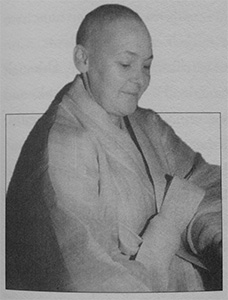
Having grown up in Australia, Chi-Kwang Sunim ordained as a bhikshuni in Korea, where she studied and practiced for many years. She currently travels between Lotus Lantern International Buddhist Center in Korea and Australia, where she is establishing a monastery. (Photo courtesy of The Buddhist Society of Victoria)