Menu:


Monastic Life


About this section:
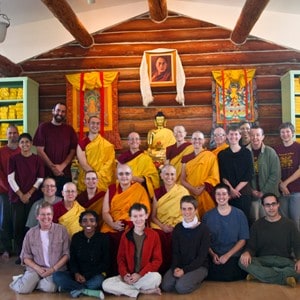
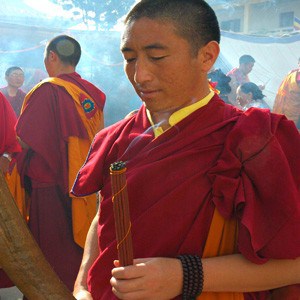
The Buddhist community includes monastics and lay people. Both are necessary for the preservation of Buddhism. However, monastics choose a life of vowed simplicity, a life directly related to the preservation and dissemination of the Dharma to benefit others. They are the core of that lifestyle that all Buddhist practitioners are committed to. In the articles here, Venerable Chodron shares with us the joys and difficulties of being a nun and the special challenges of being a Western Buddhist nun. As His Holiness the Dalai Lama notes, all Buddhist nuns have a unique role to play in the evolution of Buddhism where the universal principle of the equality of all human beings takes precedence. If you've ever wondered what it would be like to be a monastic, you'll find these articles intriguing and stimulating.


Return to 'Monastic Life' Home Page.

Help with Listening to Audio Recordings


Exploring Monastic Life 2010
Conducted by Ven. Thubten Chodron©
Sravasti Abbey, Newport, Washington, USA
10 August - 22 August, 2010


Venerable Chodron's 2010 Exploring Monastic Life retreat covered a variety of topics essential for those considering ordination to contemplate. Some of the isuues explored in this 10 part series include the life of the Buddha, the very practical aspects of living in community and how they are guided by the teachings and pracitce of ethical conduct and precepts, and how changes in relationship to friends and the community beyond the monastic environment bring challenges as well as freedom. A final guest lecture by Ven. Jampa Tsedroen provides further empahsis on ethical guidelines in living together.


10 August 2010
Living in a Monastic Environment, part 1

Venerable Chodron begins a commentary on living in a monastic environment. She explains both the theoretical aspects and the practical aspects of living in a Sangha. She discusses how the monastic precepts and the monastery guidelines help us to become transparent to others and overcome our self-centeredness. She then turns to the three practical aspects of community living which are the schedule, the kitchen and the choice of food. She shows how these three things help us to learn contentment. With clear examples she explains that simple acts of daily life such as walking, sitting and even removing our shoes convey to others the "raw material" of which we are made. A question and answer session follows in which monastics describe their own experiences in receiving support from within the community.
[61 minutes] : Download mp3 file

11 August 2010
Living in a Monastic Environment, part 2

Ven. Chodron begins this talk with a short teaching about the importance of establishing daily motivation as a helpful guide to maintaining the correct mindset when living a monastic life. She then addresses the structure of the monastic living environment as being founded on the Four Noble Truths and the Three Higher Trainings of ethical conduct, developing concentration, and developing the wisdom that frees us from samsara. Included are topics regarding celibacy and romantic relationships, elimination of distractions, dealing with authority and rules, seeing the kindness of others, and what it means to relate to sentient beings meaningfully in the age of technology. A short Q&A is at the end.
[65 minutes] : Download mp3 file

13 August 2010
The Buddha's Life, part 1

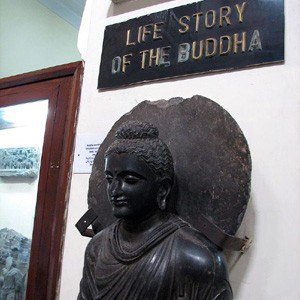
Ven. Chodron begins by relating the story of when all the Buddhas of this eon were asked to teach the beings in the degenerate age and Buddha Shakyamuni volunteered. She then tells the life of the Buddha, starting with the soothsayers' prediction that Siddhartha Gotama would either become a wheel-turning monarch or a Buddha. She speaks about Buddha's childhood and his excursions outside of the palace when he saw the four sights of a sick person, an aging person, a dead person, and a wandering mendicant and then he left the palace, cut his hair, and exchanged his clothes for rags. She speaks about the "ignoble search" and the "noble search." She tells of Siddhartha's practicing under the teacher Alara Kalama and mastering his teachings.

Q & A
  • When the Buddhas tried to get out of manifesting in our age were they already Buddhas?
  • How did he know that he hadn't reached the highest level?
  • How do you not fall in the trap of being seduced by good feelings in high states of concentration?
  • Once someone gets to the highest point of samsara why can't they keep meditating and move up?
  • Can you only attain the realization of emptiness in a human body?

  • [74 minutes] : Download mp3 file

    14 August 2010
    The Buddha's Life, part 2

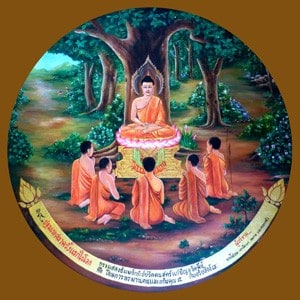
    Venerable Chodron first leads discussion about various behavior patterns which influence our communication styles, such as attachment to reputation. She then reminds us of the Ignoble Search and the Noble Search and while reading from The Greater Discourse to Saccaka, she comments on some of Buddha's life-experiences and practices, as well as his enlightenment and his first teaching in the Deer Park at Sarnath. Venerable Chodron suggests that we can use Buddha's life as an example of how to lead our own lives.
    [67 minutes] : Download mp3 file

    15 August 2010
    Ethical Conduct

    Ven. Chodron says that the whole Dharma practice is predicated on good ethical conduct. She mentions examples of difficulties we have with people that arise because we don't have good ethical conduct. She talks about how the monastic precepts were made by Buddha in response to actual situations that happened and mentions some of those stories. She teaches on the ten advantages that Buddha repeated each time he established a precept, which are grouped into the three benefits of creating harmony within the Sangha community; transforming the society; and bringing about individual liberation. The ultimate advantage is for the Dharma to be forever sustained. She speaks about her shift in perspective after taking the Bhikshuni ordination and having the feeling that she then had the responsibility to sustain the Dharma into the future.

    Q & A

  • Why did the nuns get the vow for the garlic when they already would have been breaking the vow to not cut plants?
  • Do you think lay people could sustain the Dharma too or is it not possible?
  • What is the difference between confessing a mistake to the Sangha and confessing by yourself?
  • Why shouldn't lay people read the precepts?
  • Why can't monastics cut flowers?
  • If you receive novice ordination in the Tibetan tradition and then get full Bhikshuni ordination in another tradition, how does that affect your relationship with your root guru?

  • [80 minutes] : Download mp3 file

    17 August 2010
    Community & the Six Harmonies

    Venerable Chodron teaches about living in community and the six harmonies. She begins with an overview of the different ways in which monasteries will focus on different methods in the dharma. She then explains the importance of answering questions regarding monastic life before you take ordination; you should have an understanding of how you will live. Venerable Chodron talks about each of the six harmonies and their importance in maintaining a peaceful, focused community. She points out tools that help to overcome our tendency to set ourselves apart from others and give us the opportunity to better communicate with others.
    [80 minutes] : Download mp3 file

    18 August 2010
    : Monastic Life Changes, part 1

    Venerable Chodron begins by leading a discussion examining the relationship between courage and fear. In response to an audience comment, she agrees that it takes courage to go against the eight worldly concerns. She also describes how to develop a Bodhisattva's courage. Venerable Chodron points out that monastic life reflects a commitment and talks about what that commitment is, highlighting the benefits of monastic commitments and the internal and external changes one undergoes when becoming a monastic, such as changes in appearance and livelihood, and in how a monastic relates to others.
    [72 minutes] : Download mp3 file

    20 August 2010
    Monastic Life Changes, part 2

    Venerable Chodron continues her discussion of Monastic Life Changes. She explains that by living in community we focus on overcoming our self-centered attitude. Our relationship to our teachers and the sangha as a community are contrasted with living the non-ordained life. She points out that we can have a close relationship with the community instead of having a few "sticky" relationships with just a few close friends. Venerable Chodron explains what makes a good teacher and how to choose one. She also explains the steps on the path to full ordination. In the discussion that follows she answers questions about the specifics of joining the monastery.
    [88 minutes] : Download mp3 file

    21 August 2010
    The Elements of Monastic Life

    Venerable Chodron teaches about the elements of monastic life. She describes the nature of family life, its web of attachments and its difficulties. Contrasting this to monastic life, she compares the aspects of living in community with family life. She points out that we bring deeply inculcated ways of being with us and must then deal with them while living in community. We must also learn to accept the help of others and give counsel ourselves.
    [73 minutes] : Download mp3 file

    22 August 2010
    Becoming a Monastic & Ethics taught by Ven. Jampa Tsedroen

    Venerable Jampa Tsedroen talks about becoming a monastic and ethics. She discusses how to train our minds to choose virtuous deeds and explains the need for ethical discipline on the path to liberation. Ven. Tsedroen points out the many challenges that we face on the path and touches upon the antidotes that help us to face them. An inspiring story about Ven. Tsedroen's Tibetan Buddhist teacher follows the teaching.
    [73 minutes] : Download mp3 file


    Back to Top


    What's New  |  Home  |  About Ven. Thubten Chodron  |  Activities  |  Audio Library  |  Video Library
    Publications | For Those New to Buddhism | Health
    Daily Life Dharma  |  Dealing With Emotions  |  Death & Dying  |  Prison Dharma  |  Youth & the Dharma
    Travels  |  Dharma Guidance on Current Events  |  FAQ  |  Gradual Path to Enlightenment (Lamrim)  
    Lamrim Articles/Transcripts  |  Thought Transformation & Other Commentaries  |  Prayers & Practices
    Meditation  |  Retreat  |  Monastic Life  |  Science & Buddhism  |  Interreligious Dialogue  
    Other Articles/Audio  | Other Resources  |  Sravasti Abbey  |  Links  |  About Us  |  Email Webmaster


    All rights reserved. No part of this article may be reproduced by any means for commercial purposes or mass circulation without prior written permission from the webmaster who will communicate your request to Ven. Thubten Chodron. You're welcome to download for your own personal reading.
    Please also contact the webmaster if you find any mistakes or broken links.