Menu:


Thought Transformation and Other Commentaries


Return to 'Thought Transformation and Other Commentaries' Home Page.


Patience
from Chapter 6 of A Guide to the Bodhisattva Way of Life by Shantideva
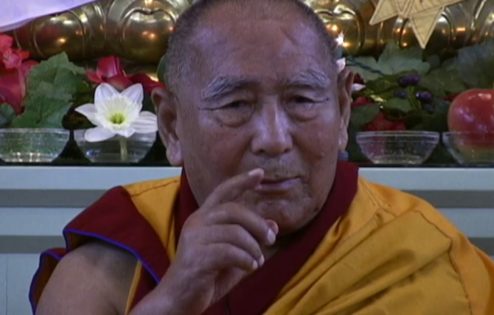
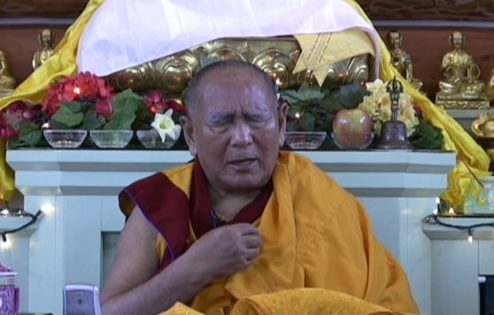
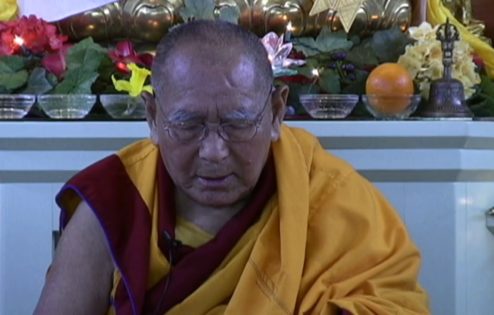
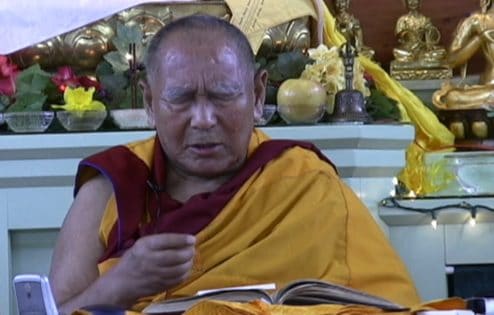
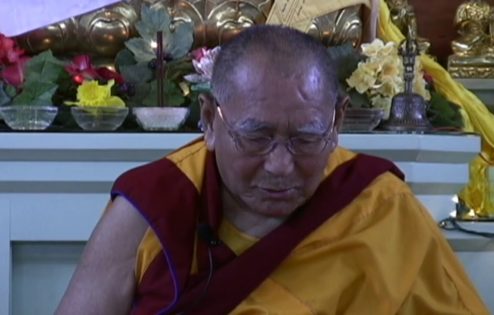
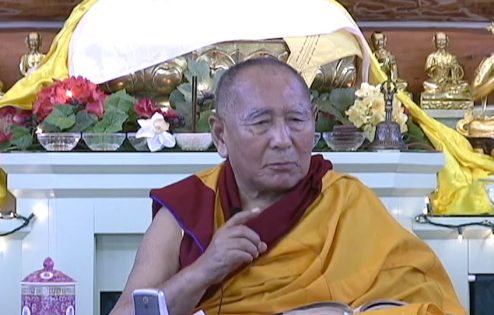
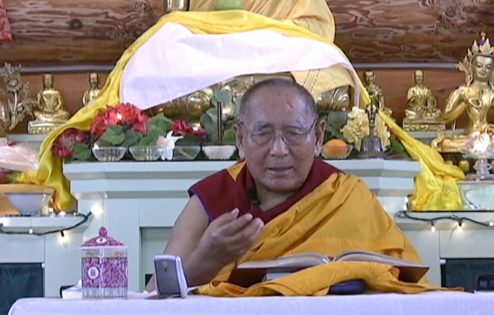
Geshe Lhundub Sopa
Sravasti Abbey, Washington, USA
28 April 28 - 6 May, 2009


Geshe Lhundub Sopa taught Chapter Six: Patience from Shantideva’s A Guide to the Bodhisattva Way of Life at Sravasti Abbey between 28 April 28 and 6May, 2009.

28 April 2009: Verses 1-7

Audio [67 minutes] : Download mp3 file
Geshe-la talks about the preciousness of having the opportunity to engage in the Dharma and about the capacity of the Buddha's teaching to ennoble beings, even those who have committed the most powerful negative karma.

Geshe-la begins the explanation of Shantideva's “Chapter Six.” He talks about the disadvantages of anger (anger can destroy virtue accumulated through eons, makes one miserable, and destroys relationships) and explains how anger arises from unhappiness, which in turn arises from things perceived as undesirable.

29 April 2009: Verses 8-21

Audio [94 minutes] : Download mp3 file
Geshe-la begins the teaching by explaining a quote from Lama Tzong Khapa, which states that patience, the ability to bear any kind of hardship, is a natural ornament and can be compared to a garuda bird and to an armor.

He gives a brief overview of the disadvantages of anger and the causes of anger, which he had explained previously. He then explains in detail the way in which anger arises due to unhappiness and introduces the three kinds of patience that can be used to counteract it: the patience of taking in voluntarily whatever harm, the patience of thinking about the truth, and the patience of not retaliating.

Geshe-la goes on to teach on the first kind of patience, taking voluntarily whatever harm. The topic includes a detailed explanation of the benefit of meditating on suffering:
- thinking that all contaminated things are in the nature of suffering, which increases renunciation
- developing patience
- by getting accustomed to harm one is able to bear greater hardships
- getting rid of delusions, such as pride
- stirring compassion

30 April 2009: Verses 22-31

Audio [94 minutes] : Download mp3 file
In the beginning Geshe-la explains how all delusions and sufferings stem from grasping at a self that doesn't exist and how therefore one's own egotistic view is one's real enemy.

Geshe-la goes on to explain the second kind of patience, which is patience by thinking about the reality of phenomena. This topic has three topics, out of which Geshe-la covers the first two:
- there is no anger or angry person independent of causes and conditions (because one is under the power of delusions; because anger doesn't arise at will; and because faults arise naturally from their respective causes.)
- rejecting the existence of a free cause, such as it is conceived by the Samkhya system, which includes refuting an independent cause and refuting a permanent self.

2 May 2009: Verses 31-45

Audio [94 minutes] : Download mp3 file
Geshe-la begins by quoting Shantideva, who says that we hold a precious human life in the same way someone holds a precious treasure while being unaware of its value and warns of the danger of wasting it by acting as servants under the power of delusions which have neither limbs, nor courage or intelligence.

Geshe-la continues the explanation of the second kind of patience (thinking about reality) with the third subtopic, which is the purpose of patience: the nature of things being dependent and empty of inherent existence, one becomes at ease with whatever may come.

Then Geshe-la goes on to teach about the third kind of patience, the patience of not retaliating, with its three subtopics: the method of compassion, overcoming anger, and contemplating one's fault when experiencing undesirable situations.


Back to Top


What's New  |  Home  |  About Ven. Thubten Chodron  |  Activities  |  Audio Library  |  Video Library
Publications | For Those New to Buddhism | Health
Daily Life Dharma  |  Dealing With Emotions  |  Death & Dying  |  Prison Dharma  |  Youth & the Dharma
Travels  |  Dharma Guidance on Current Events  |  FAQ  |  Gradual Path to Enlightenment (Lamrim)  
Lamrim Articles/Transcripts  |  Thought Transformation & Other Commentaries  |  Prayers & Practices
Meditation  |  Retreat  |  Monastic Life  |  Science & Buddhism  |  Interreligious Dialogue  
Other Articles/Audio  | Other Resources  |  Sravasti Abbey  |  Links  |  About Us  |  Email Webmaster


All rights reserved. No part of this article may be reproduced by any means for commercial purposes or mass circulation without prior written permission from the webmaster who will communicate your request to Ven. Thubten Chodron. You're welcome to download for your own personal reading.
Please also contact the webmaster if you find any mistakes or broken links.