Organ donation is a personal decision
 Venerable Thubten Chodron
  Helping the Dying and Deceased
  Jun 18, 2011
In this age of medical technology, many people ask about donating their organs at death. Is it recommended from the Buddhist point of view?
First, it’s important to note that this is an individual choice. Each person must decide this for him or herself, and people may make different decisions, without one choice being right and the other wrong.
Two factors to consider when making this decision are:
- Will organ donation harm the dying person?
- What is the role of compassion in making this decision?
In response to the first, unlike in some religions, in Buddhism preserving the integrity of a dead body is not important. Buddhism does not believe in the coming of a messiah or a bodily resurrection at that time. Thus, removing organs is not an issue from that point of view.
Nevertheless, the question remains if the consciousness of the dying person could be adversely affected by organ transplant, since the surgery must take place immediately upon the cessation of the breath. According to Tibetan Buddhism, the consciousness may remain in the body for hours or occasionally days after the breath has stopped. During the time between the cessation of the breath and the departure of the subtlest consciousness from the body—which is the actual moment of death—it is important for the body to be undisturbed so that the consciousness can naturally absorb into subtler states. If the body is operated upon, the consciousness may be disturbed and this could adversely affect the person’s next rebirth.
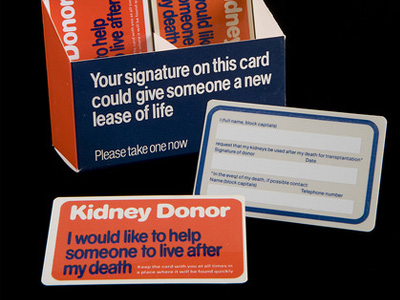
Organ donation is an individual choice. Each person must decide this for him or herself. (Photo by Wellcome Images)
On the other hand, some people have very powerful compassion and wish to donate their organs even if it could disturb their consciousness at the time of death. Such compassion for others who could use the organs is certainly admirable.
Thus, it is up to each person to decide, because each person has different concerns and capabilities. Someone who feels that his or her mind or meditation practice may be weak at death may prefer to not give their organs in order to avoid possible harm to their future lives. Others who have a strong meditation practice may not be concerned with this. Those with strong compassion may be willing to risk possible danger to themselves in order to benefit others. Each of us must look inside honestly and choose what we consider best according to our capabilities and level of practice.

Venerable Thubten Chodron
Venerable Chodron emphasizes the practical application of Buddha’s teachings in our daily lives and is especially skilled at explaining them in ways easily understood and practiced by Westerners. She is well known for her warm, humorous, and lucid teachings. She was ordained as a Buddhist nun in 1977 by Kyabje Ling Rinpoche in Dharamsala, India, and in 1986 she received bhikshuni (full) ordination in Taiwan. Read her full bio.