Religious diversity and religious harmony
Religious diversity and religious harmony
 Venerable Thubten Chodron
  Interfaith Dialogue
  Jun 18, 2011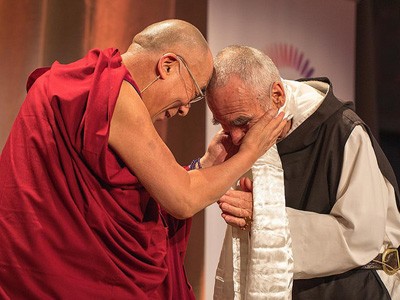
This is the introduction to the book Interfaith Insights, currently out of print.
If someone had told me when I was twenty years old that I would become a Buddhist nun, I would have told them they were crazy. Not only could I not imagine being celibate or curbing my attachment to pleasures of the senses, but also I thought religion was harmful. Having studied history in university, I learned that almost every generation in Europe had seen a war over religion. Millions of people have been killed in the name of religion throughout history, and I thought, “What use is religion if it causes harm?” Over the years, I have come to understand that the problem is not religion per se, but the disturbing attitudes in the minds of human beings that make them misunderstand the meaning of whatever religion they follow. The holy beings—Buddha, Jesus, Mohammed, Krishna, Moses and others—would be distressed by what beings with limited understanding have done and still do in their name.
One of the chief misunderstandings that we ignorant beings are prone to is “the sports team mentality” towards religion. We identify with one sports team or religion and then, juxtaposing it with another, think that ours has to be the best. We cheer for our religion, and try to convert others to it so that it will have more members. We think that the more people believe in it, the truer it must be. We put down other religions in an attempt to prove to ourselves that ours is supreme. This is a useless pursuit, one that leads to disharmony and even violence in society, and is contrary to the real intent of all religions. Born from fear, it is an activity that does not solve our insecurity but instead accentuates it.
This attitude of “religious patriotism cum fundamentalism” misunderstands the purpose of religion, and confuses sincere religious practice with religious institutions. While we can measure the number of people who call themselves Jews, Muslims, Buddhists, Hindus, or Christians, we cannot measure the depth of understanding and experience of any of those people. Being religious is more than attaching a certain label to ourselves; it is transforming our minds and hearts so that we become better people. Being truly religious occurs in our hearts—no one else can see this with their eyes. Religious institutions, however, can be seen and measured. We must ask ourselves, “What is my purpose? Is it to be religious or to promote a religious institution?” Religions have their source in mystical experience; religious institutions are the creations of imperfect human beings. They are designed to facilitate religious practice, but whether religious institutions are successful in doing this depends on the human beings who are their members. One can be deeply religious and not belong to any religious institution. Similarly, one can promote a religious institution and not have any feeling in one’s heart for the lofty principles that religion advocates.
All religions are for the purpose of human happiness. They all teach ethics and compassion and stress harmony among people. Philosophically there are differences, and while recognizing those, we can still appreciate the similarities. His Holiness the Dalai Lama once said that he believes the real religion is compassion. We experience the compassion of others from infancy throughout our lives. Without the kindness and efforts of others, it would be impossible for us to sustain our lives alone. Developing our compassion enables us to live harmoniously with others and eventually to experience a peaceful death. People from all faiths agree with this. We experience compassion naturally simply by being a human being. However, our knowledge of doctrines such as creation or karma is learned later on.
Sometimes people ask, “Wouldn’t it be better if there were only one religion in the world and everyone believed in it? Then there would be no fighting among the various faiths.” While we may be initially attracted to this idea, from a Buddhist viewpoint the multiplicity of religions is necessary and desirable. First, it would be impossible to make each and every human being believe in the same philosophical or religious tenets. People clearly have different ways of thinking and different tendencies, and there is no way to make all of them hold the same beliefs. Second, it would not be beneficial for only one religious system to exist in our world. Because people have different inclinations and attitudes, a variety of religions is necessary to ensure that each person can find one that serves him or her best. Diverse systems of thought and practice inspire people. As long as a person endeavors to live ethically and harmoniously, which religion he or she follows—if any—is irrelevant.
Are they all one?
We sometimes have difficulty accommodating the fact that there are so many different religions, and find comfort in thinking that they are all essentially the same—they are like different paths up the same mountain or like surveying many valleys from the same mountain top. Many people believe that the founders of each religion had the same mystical experience of reality. The words describing an experience are never the same as that experience. They are simply approximations, human attempts to convey in words what is by nature inexpressible and inconceivable. Thus many people postulate that the founders of the various religions selected words from their respective cultures to describe mystical experiences which were essentially identical. Later generations, however, focused more on the words than on the experience, and that is the source of philosophical differences among religions. In comparing Christianity and Buddhism, for example, some people speculate that the Trinity in Christianity is another formulation of the three kayas in Buddhism. Others say that God the creator is the equivalent of karma, or that God the ultimate is the equivalent of Dharma—the true path and true cessation of suffering.
Although some of these theories may be correct, we ordinary beings are not capable of discerning this. Differences in philosophical approach clearly exist among religions. For example, Christianity speaks of an everlasting soul, while Buddhism talks of the lack of a permanent, singular, independent self or soul. By practicing according to the philosophy of one system will one generate the same mystical experience as practicing according to another system? Only a person who has followed both systems to their ends, gaining direct realizations of both paths, could discern this through his or her own experience. Only then could one ascertain for sure whether the two religions originated from and point to the same experience of reality. For those of us who have not gained direct realizations of our own religion, let alone of other faiths, it is presumptuous to say that they lead to either the same or to different goals. We must simply remain content to say, “It’s possible that all religions point to the same mystical reality, but I don’t know.” Intellectual speculation on this point may be interesting and may soothe our anxiety by making all religions “right,” but it is superfluous to religious practice and spiritual experience. While we live in a state of dissatisfaction, confusion, and suffering—a point all religions agree on—what is most important is for us to practice according to our faith and transform our hearts and minds into compassion and wisdom.
Fortunately, for religious harmony and interreligious dialogue to occur, it is not necessary to conceptually juggle the different beliefs to make them the same. We can accept the variations in philosophy and even rejoice in them. Hearing views different from our own strengthens our ability to investigate. It challenges us to have a deeper understanding of the philosophy we study. It also calls us to explore what is true, rather than to be waylaid by simply repeating the words of the religious texts without understanding or experiencing their deeper meaning.
The value of interreligious dialogue
What, then, is the value of interreligious dialogue? How should it be conducted? The purpose is to benefit people, not to debate and arise victorious. When we approach dialogue with an open mind, respect and willingness to learn, we benefit others and are benefited in return. However, if we or the other party lack this attitude, then it is better not to discuss religion. For communication to occur, there has to be a sincere wish to listen, not simply to speak. If this is missing, it is best to excuse ourselves from the conversation. Were it to continue, the discussion would degenerate into an issue of power, not spirituality, with one party trying to dominate or convert the other. Genuine interreligious dialogue occurs in an atmosphere of mutual respect and genuine interest. It is a sharing of spirituality that inspires all parties. Someone once observed, “When philosophers and theologians meet, they argue. When spiritual practitioners and mystics meet, they smile.”
Through my experience of talking with people of other faiths, I have learned about the similarities and differences in religious practice. In terms of the similarities, first, the chief obstacles to any form of spiritual practice are materialism and attachment to pleasures of the five senses, praise and reputation. All spiritual people agree about this. We can only cultivate ourselves spiritually to the extent we understand the disadvantages of being distracted by and attached to external pleasures. The mind that craves more and better—be it more or better material possessions, fame, approval, or pleasure from the senses—has limited energy to direct toward the cultivation of ethical conduct, love, compassion or wisdom. All spiritual traditions emphasize letting go of our worldly attitudes.
Second, there are similarities in life style. In the chapter, “Spiritual Sisters,” two nuns—one Catholic, the other Buddhist—discuss the challenges of living without financial security, remaining celibate, and living in community. Although our philosophical beliefs differ, we understand each other’s life style and practice at the heart level. This theme is also taken up in Sister Candasiri’s account, “Love Unbounded,” the story of two Theravada Buddhist nuns who stayed in an Anglican nunnery.
Practitioners of various faiths also share similar experiences. For example, they must ride the ups and downs that occur in spiritual practice. Many years ago Sister Kathleen England came to visit our Buddhist monastery in France. She had been a Catholic nun for over fifty years and worked in the Vatican. At first, we had some “conflict” because she wanted to learn about our practice but we wanted her to tell us about hers! Finally, after we each had a chance to listen to the other, I asked her, “How have you handled the crises that arise during practice? How do you deal with those ‘dark hours of the heart’ when you are filled with self-criticism or doubt?” She gave invaluable advice: “When we go into crisis, it signifies not that we are backsliding in our practice, but that we are ready to grow. Our previous understanding, which worked for a while, is no longer sufficient. We need to go deeper, and we are ready to do so. That is why the crisis occurs. It is an invaluable time for growth, because as we work our way through it, we come to understandings that we were not able to have before.” What I learned from Sister Kathleen has enabled me to remain a Buddhist nun all these years.
Another experience that people from differing religions may share is that of preserving their religious practice and culture when they live as a minority in a foreign land. Because thousands of Tibetans have been living in exile in India and elsewhere since 1959, they have become intrigued by the Jewish people’s experience of preserving their religion in the Diaspora. In recent years, mutually beneficial dialogue has occurred between Jews and Tibetan Buddhists. Tibetans have learned ways to preserve their unique religion and culture through family rituals and community activities while living as a minority in other countries. Meanwhile, Jews have had a new look at meditation and mysticism and were encouraged to spread the teachings in their own tradition on these topics. These themes are elaborated upon in Rodger Kamenetz’ article, “What I Learned About Judaism from the Dalai Lama.”
People from various religions can learn a great deal from each other’s practices. For example, His Holiness the Dalai Lama often praises the social work that Christians undertake in society: the schools, orphanages, homeless shelters and hospitals they set up and work in, and the aid they give to refugees and to the poor. He encourages Buddhists to learn from the example of their Christian brothers and sisters and to engage in projects for the benefit of society at large. On the other hand, he says that Christians can learn meditation techniques from Buddhists. In Buddhism the methods to calm and focus the mind are described very clearly. These can be practiced by people of any faith and applied to their own religious system. They can also be practiced by people who have no particular faith and simply seek to quiet their minds and eliminate stress. Thus, dialogue with people from other religions can show us practical ways to better live according to the principles of our own religion.
Interreligious sharing helps us to become more open-minded. It also sharpens our abilities to investigate and to examine ourselves and our beliefs. Spiritual people want their limited views to be expanded. They seek to have their ignorance removed; they want their capacity for understanding and acceptance to be stretched. Interreligious contact presents this possibility. However, what happens if we are not prepared for this and the dialogue instead causes defensiveness or confusion about our own practice? Seen from the proper perspective, this too presents an opportunity for growth. For example, when we talk with a person from another religion and find ourselves becoming defensive, we must examine our minds. Have we fallen into the trap of subtly competing with the other person to prove one religion right and the other wrong? If so, we need to let go of our “sports team mentality” and remind ourselves of the real purpose of our conversation. No one else can make us feel inferior: this attitude arises from our own competing mind. When we cease this, then there are no winners or losers.
Are we defensive because we worry about the other person liking and approving of us? Has our religion become part of our ego-identity so that if our religion is criticized, we feel misunderstood and rebuked? We have to question our need for external validation of our beliefs. Why do we need other people to believe the same thing we do in order to feel secure in our beliefs? We may have forgotten that people have different aptitudes and temperaments and will therefore see things differently. If we have checked the foundations for our spiritual beliefs and have confidence in them, there is no need to become defensive because others disagree with them.
But what if we have not examined our beliefs deeply? What if the other person asks a question that we do not know the answer to and we become confused about what to believe? What do we do if interreligious discussion causes our ignorance to become evident or doubts to arise in our mind? Although this may initially feel uncomfortable, if could be valuable for our practice. When we do not know the answer to a question or cannot explain it clearly, we are motivated to ask our teachers and spiritual friends for more information. It addition, we need to spend more time reflecting on what we already know in order to understand it properly. When we listen to teachings, we sometimes think we correctly understand the entire topic. In fact, we may have understood the words, but because the meaning is multi-layered, we need time to explore it in depth. It is unrealistic to expect ourselves or others to be able to “know all the answers.” Doubt or confusion can be helpful stimulants arousing us from complacency. We do not need to be afraid of these things. We simply need to deepen our practice, researching the answers to questions and reflecting on their meaning.
As we mature in our own spiritual development, interreligious sharing becomes a way to deepen and enrich the practice of our own spiritual tradition. Thomas Merton, the American Cistercian monk who pursued contact with the East and its religions said it beautifully:
I think that we have now reached a stage of (long overdue) religious maturity at which it may be possible for someone to remain perfectly faithful to a Christian and Western monastic commitment, and yet learn in depth from, say, a Buddhist or Hindu discipline or experience. I believe that some of us need to do this in order to improve the quality of our own monastic life and even to help in the task of monastic renewal which has been undertaken in the Western Church.1
Merton saw inter-monastic dialogue as occurring in three stages, preverbal, verbal and post verbal:
The “preverbal” level is that of the unspoken and indefinable “preparation,” the “predisposition” of mind and heart, necessary for all “monastic” experience whatever… The monk must be wide open to life and to new experience because he has fully utilized his own tradition and gone beyond it. This will permit him to meet a discipline of another apparently remote and alien tradition, and find a common ground of verbal understanding with the other. The “post-verbal” level will then, at least ideally, be that on which both meet beyond their own words and their own understanding in the silence of an ultimate experience which might conceivably not have occurred if they had not met and spoken. I would call this “communion.” I think it is something that the deepest ground of our being cries out for, and it is something for which a lifetime of striving would not be enough.2
Some of the deepest interreligious contact I have personally experienced has been along these lines. During the Jewish-Buddhist dialogue that occurred in 1990 in Dharamsala, India, Rabbi Jonathan Omer-Man and I met each morning and meditated together on the porch of his guest house, in the cool morning air. Although we spoke a little before or after, the deepest communication occurred during the silence.
Another time, I went with a few Buddhist monastics to visit a Catholic monk who was a hermit in the mountains of Spain. We had heard that he had once met with the Dalai Lama and we wanted to speak with him. He had no idea we were coming, but when we finally found his hut, he welcomed us in. On his altar were the white scarf and picture of Avalokiteshvara, the Buddha of Compassion, that the Dalai Lama had given him. He suggested we meditate together first, and for about an hour while the late afternoon sun shone into his hut, we did. Having concluded our meditation, all of us found that speaking was unnecessary; what we had to say had been communicated without words and our hearts were full.
Yet another example occurred during a visit I paid to Mt. St. Mary’s Abbey, near Boston. I had met two sisters from this Trappistine order in Dharamsala, India the year before, during His Holiness the Dalai Lama’s annual spring teachings. I relished our discussion over lunch, in which we spoke of qualities to look for in people who aspire to a monastic life, how to train them so as to actualize their potential, and how to live together in a monastic community. Then, I discovered, much to my surprise, that they had arranged for me to give a talk about the development of love and compassion to the entire community of 54 cloistered nuns. This audience was alive with feeling and each word we spoke reverberated on many levels and in many ways due to the intensity of their practice of love and compassion. We could speak honestly and unabashedly of how our self-centeredness would sabotage our compassion or how our anger would unexpectedly appear and waylay our love. As we discussed ways to tame our disturbing attitudes and enhance our positive ones, our feeling of common purpose—to transform our minds and become more loving—was palpable.
Such experiences indicate to me that although there may be philosophical differences among religions and although they may or may not lead to the exact same ultimate goal, there are commonalties that are mutually enriching. For example, true practitioners of all faiths seek to cultivate qualities free from the self-centered ego with all of its wants, needs and opinions. They believe that lasting happiness for themselves and others comes through this internal cultivation, not through accumulating material objects. They know that a simple lifestyle emphasizing non-attachment allows for the development of impartial love and compassion for all beings, and they engage in daily self-reflection and religious practices so that their spiritual qualities will be integrated into their lives.
Making peace with our past
The audience for this book is diverse. Some people who read it will be Buddhist, some Christian, some Jewish, some Muslim, some Hindu, some of other religions, others of no religion. Similarly, some will be Westerners, some Asians, some Africans, some from other countries. Therefore, it could be helpful to look at issues that might arise for various people when they consider contact with people of different faiths.
In recent years, many Westerners have become interested in Buddhism and other “non-Western” religions. Some of them have negative feelings toward the religion they learned as children. This could happen for several reasons: a religious teacher or leader misunderstood them or unfairly disciplined them; religion was forced upon them by parents or teachers; they disagreed with the sexism or other prejudices displayed in the religious institutions; they found so-called “religious people” to be hypocritical, elitist, judgmental or closed-minded. If we encounter another religion that better meets our needs, it is all too tempting to give vent to previous frustration and see everything from the religion we grew up in as negative. However, it is extremely important to make peace with our past, not to reject it. If we stereotype an entire body of practitioners and judge them, we have become closed-minded and prejudiced. Such resentment and bias obstruct our practicing our new faith. When we have this type of “negative loyalty” to something from our past, we often reenact the very thing we disapprove of. Although we may think we are free from the influence of something because we have rejected it, in fact that thing may have a great hold on our mind because so much of our energy is tied up in disliking it.
Thus, having a negative attitude toward the religion we learned as a child blocks our spiritual development. It is also unrealistic, for despite the things we do not like or disagree with, we did learn many good things from our childhood religion. For example, it instilled in us many ethical principles that enable us to live in harmony with others. It taught us the value of love and compassion. It encouraged us to believe that something was more important than our self-centeredness. It taught us that there is another kind of happiness besides the short-term happiness we receive from pleasures of the senses. All these things laid a foundation in us for further spiritual training, and thus in part helped us to connect with the spiritual beliefs of our new religion. When we think deeply, we realize that we received benefit from our childhood religion, even though it may not be the one we choose to practice as adults. We must avoid painting anything as all good or all bad. Thus, it can be helpful for Westerners who have become Buddhists or converted to other religions to reflect upon both the strong points and the weaknesses of their religious up-bringing so they can reach some emotional and philosophical resolution regarding them. Kabir Saxena in “Dharma Masala” describes with love and respect the benefits he received from his Hindu and Christian roots, and how they nurture his present spiritual practice as a Buddhist.
Such a process could also be helpful for Asians who grew up as nominal Buddhists or Hindus and later became Christians. I felt sad when living in Asia to meet some Asians who had become Christians who had thrown away beautiful Asian religious art—some of it quite old—because it had images of “heathens.” If we convert to a religion that came from another part of the world, it is not necessary to dismiss or destroy the beauty and value of our own cultural heritage. Asians do not need to become Western to practice Christianity. Similarly, Westerners do not need to become Asian in culture to practice Buddhism or Hinduism, nor do they need to become African in culture to practice Islam.
Coming out of the closet
While living in Singapore, some educated Singaporean Buddhists told me they were hesitant to tell their colleagues at work that they are Buddhist. In Singapore, some people think that if one is Christian, then one is more Western and modern. Therefore, some Buddhists think that if others know they are Buddhist, others will look down upon them as “old-fashioned.” Also, because some Christians in Singapore are evangelical, the Buddhists fear meeting with unpleasant pressure to attend church or read Christian literature. Indeed, aggressive religious propagation is unfortunate and damaging to harmony in society. However, that need not make us embarrassed about our religious beliefs or upset with people who are unskillful.
Similarly, some Westerners are shy about telling their colleagues or family that they are Buddhist. Unlike the Singaporean Buddhists, these Westerners do not fear being considered old-fashioned. Rather, they are concerned that others will think they are different or strange. Although Western culture seemingly promotes individuality, there is tremendous pressure to conform and to do, think, or believe like others. Westerners fear that they will not be accepted or approved of if they do not share the same perspectives as the group.
It is difficult to practice our religion if we lack confidence in it or in ourselves. Embarrassment over telling others we follow a particular faith could come from a couple of sources: first, we are not sure about what we believe and why; or second, we are attached to our reputation and fear losing friends. When we have not spent time thinking about our beliefs or if we do think about them but still have major doubts, then interreligious exchange could appear threatening to us. We harbor fears: “Maybe I will not know the answer to a question,” “Maybe I will inadvertently misrepresent my religion,” or “Maybe I will respond incorrectly and the other person will refute it. What will I I believe then?” When asked a question that we cannot answer with assurance, we can simply reply that we do not know but will research it. There is no need to feel humiliated or insecure because every teaching is not clear in our minds. After all, we are not yet enlightened beings!
We must look closely at our attachment to reputation and to being liked by others. Will others really ostracize us if we have different views? Why is others’ approval so important to us? If others have different views, does that mean ours are wrong? Is the only basis for friendship having the same religion? Many of these fears are projections of our minds. If we are kind to others and try to communicate effectively with them, they surely will respond positively to us no matter what our religion. If, due to their closed-mindedness, others remain aloof, there is nothing we can do. It is not necessary that everyone likes us or approves of us. We do not need external validation to be sure of our spiritual path or of ourselves. We need internal confidence that arises from contemplating the truths of our own faith and applying them to our lives.
Equanimity and self-confidence are the antidotes to embarrassment or insecurity about our beliefs. We cultivate equanimity by remembering that reputation is simply others’ opinions—thoughts in their minds that can change very quickly and are not reliable. In addition, people will always have a variety of opinions, some agreeing with ours and others not. It is legitimate for diverse beliefs to exist. Human contact and warmth come through sharing the experience of being human beings, not through holding the same philosophies. Self-confidence is developed by remembering that we—and others—have an enlightened potential. We may not be totally wise or compassionate now, but we can become that way. This awareness of our internal goodness and potential is a more stable basis for self-confidence and self-esteem than other people’s opinions of us. If we are aware of this, we will not be disturbed by what others think of us, but will continue to relate to them with a kind heart.
It is possible that the opposite happens, that is, that we become critical and impatient with people who have worldly values or who do not share our faith. We must look at where such intolerance comes from within us. Why do we insist that everyone be like us? Could insecurity be fueling our intolerance? To be kind-hearted, it is not necessary that people identify themselves with a particular faith. We must avoid becoming attached to labels, for this breeds the “sports team mentality.” Relating to people with an open heart and respecting them is what all genuine religious leaders prescribe. We are neglecting the meaning of the teachings if we fall prey to a self-righteous, judgmental attitude. Since each person has the Buddha nature or potential—or to put it in Christian words, since each person is the creation and image of God—he or she is worthy of our respect.

Venerable Thubten Chodron
Venerable Chodron emphasizes the practical application of Buddha’s teachings in our daily lives and is especially skilled at explaining them in ways easily understood and practiced by Westerners. She is well known for her warm, humorous, and lucid teachings. She was ordained as a Buddhist nun in 1977 by Kyabje Ling Rinpoche in Dharamsala, India, and in 1986 she received bhikshuni (full) ordination in Taiwan. Read her full bio.