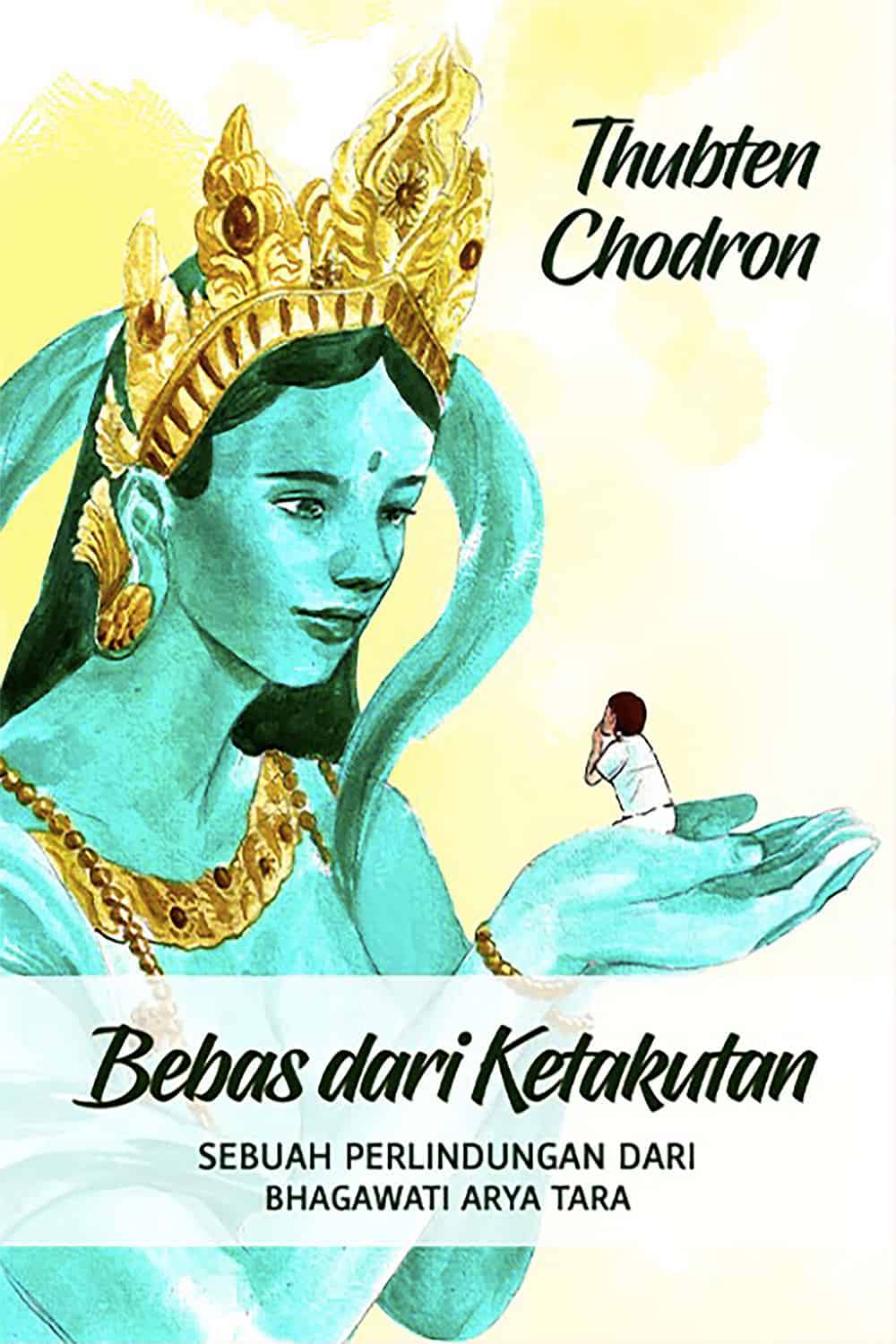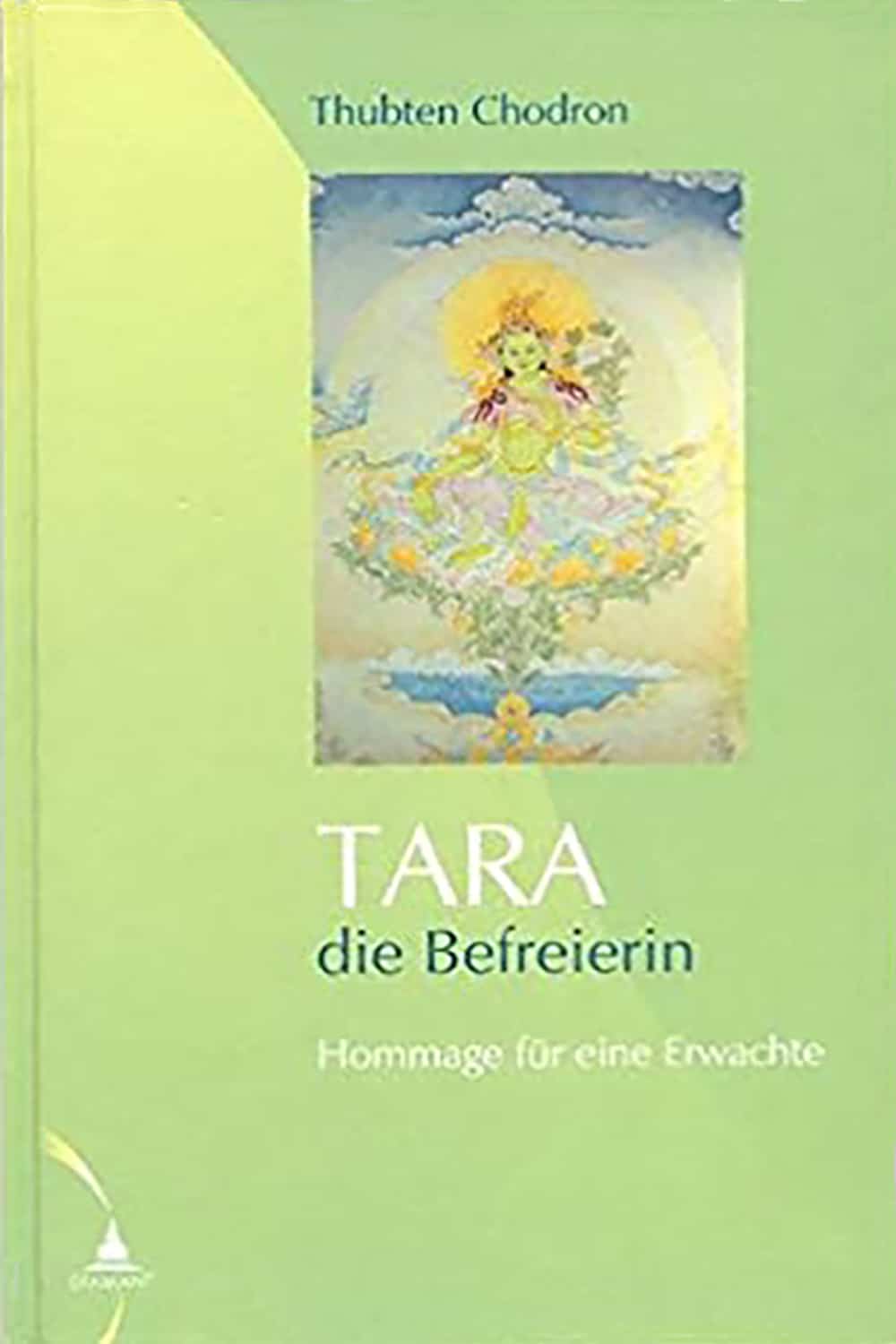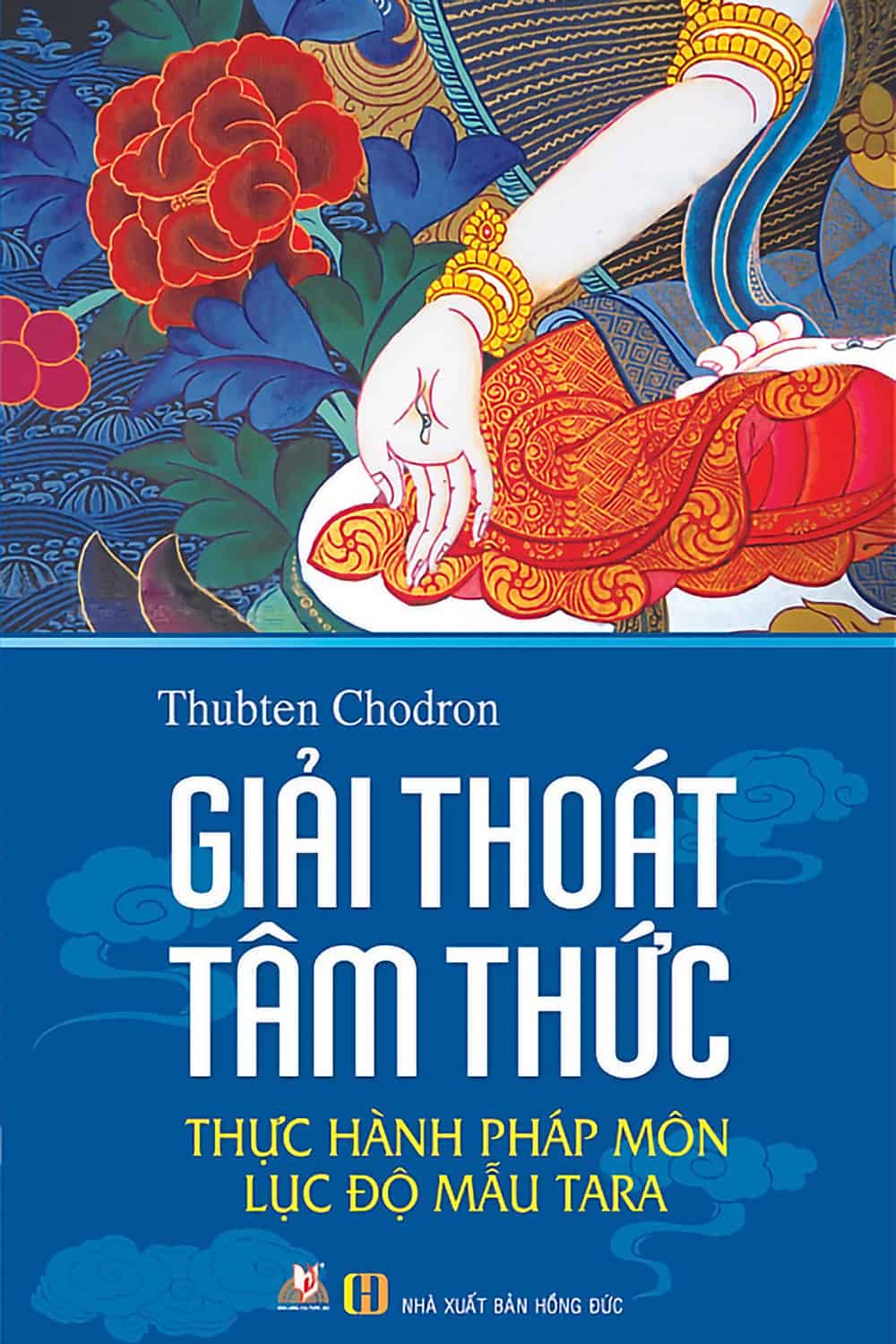
|

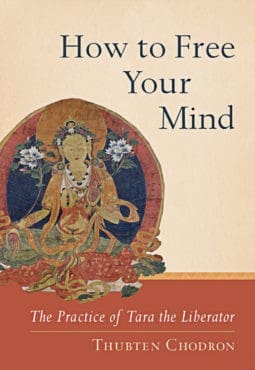
HOW TO FREE
YOUR MIND: TARA THE LIBERATOR
by Venerable Thubten Chodron
First published in 2005 by
Snow Lion Publications, USA.
The beloved deity Tara
is the feminine embodiment of enlightenment. For centuries,
practitioners have turned to her for protection from both
external and internal dangers, from fire to arrogance. This
well-written book, presented in conversational style, is
an authoritative guide to the practice of Tara. Includes
very helpful chapters on the whys and hows of various Tara
practices as well as a commentary on the "Homage to
the 21 Taras."
[ More on
Arya Tara: Click here. ]
Contents:
Preface
Introduction.
Excerpts:
Ever since Lama Thubten Yeshe first
introduced me to the meditation practice of Green Tara in
1975, I was attracted to this Buddha. Although all Buddhas
have the same realizations, Tara's appearance was very friendly
and welcoming. While my mind would sometimes project its
self-created authority issues on other Buddhas, admitting
my imperfections to Tara didn't bother me. Fortunately,
I gradually came to feel this way about other enlightened
ones, too. Lama Yeshe later explained that most Tibetan
Buddhists feel close to Tara; in fact, to indicate his own
affection, he called her "Mummy Tara."
This book is written with that affection.
Tara's meditation practice has helped me through many ups
and downs in my life and in my Dharma practice. My wish
is to share my understanding of Tara with you in the hopes
that it will help you to understand more clearly your own
mind and its potential. Tara is a manifestation of what
each of us can become, and as such, she shows us good qualities
to cultivate on the path to enlightenment as well as obstacles
to abandon.
How to Free Your Mind: Tara the
Liberator is directed toward a general audience. One
need not be a Buddhist to read it or gain something from
it. If you are curious about Buddhist deities, if you want
to learn how to free your mind from disturbing emotions
such as clinging attachment and anger, if you wonder what
the nature of reality is; if you are interested in female
Buddhas, you will find something of interest in these pages.
1. Who is Tara?
Chapter 1 introduces Tara
and discusses her symbolism and the various ways in which
we can view her.
2. Meditating on Tara
3. Tara, Liberator from the Eight Dangers
Chapter 2 describes the purpose of
meditating on Tara and the important elements of a sadhana
-- or guided meditation -- on Tara. Here we learn about
refuge in the Three Jewels, the loving and compassionate
motivation of bodhichitta, and how to visualize Green Tara
and recite her mantra. Tara's name means "liberator,"
and she is said to liberate us from eight internal and eight
external dangers. She does this by teaching us the ways
to tame our mind so that we are not constantly befuddled
by pride, ignorance, anger, jealousy, distorted views, miserliness,
attachment, and doubt. Chapter 3 explains this.
4. Homage to the Twenty-one
Taras
Chapter 4 is the "Homage
to the Twenty-one Taras," praises to Tara that are
frequently chanted in Tibetan monasteries and homes.
5. Commentary on Homage
to the Twenty-one Taras
6. Benefits of Reciting the Homage
Chapter 5 contains the explanation
of the "Homage" and the twenty-one manifestations
of Tara. After reciting the "Homage," people often
chant some verses describing the benefits of reciting it.
These verses and their explanation are found in Chapter
6.
7. A Song of Longing for
Tara, the Infallible
8. Reflections on A Song of Longing
for Tara, the Infallible by Lama Lobsang Tenpey Gyaltsen
Chapter 7 contains one of Ven. Chodron's
favorite poems, "A Song of Longing for Tara, the Infallible,"
written by Lama Lobsang Tenpey Gyaltsen when he was only
eighteen or nineteen years old. Her reflections on this
moving poem are found in Chapter 8. The song gives us wise
advice for Dharma practice, and following it brings us closer
to Tara.
9. Taras Ultimate Nature
10. Emptiness and Dependent Arising
Chapters 9 and 10 discuss Tara's ultimate
nature, her emptiness of inherent existence. Her ultimate
nature and ours are the same, and to the extent that we
realize emptiness, the afflictions obscuring our mind evaporate
and we approach Tara's enlightened state.
Glossary
Additional Reading
Excerpts:
The purpose of meditating on Tara isn't
to feel good by worshiping an external deity, "I offered
apples to Tara, so I'm happy because now she'll help me."
The ultimate purpose of showing respect and praising Tara's
qualities is to provoke us to contemplate: How can I develop
those same qualities? How can I transform my mind to become
more like Tara?
Seeing Tara with her right hand reaching
out and her right foot extended to benefit others causes
us to reflect: Do I reach out to benefit others? Do I approach
others with openness? Or am I suspicious of them and need
to check things out to see if I'm safe first? Her image
acts as a mirror for us to examine ourselves and to contemplate
how we can approach others with an open hand and kind heart.
What attitudes and emotions do we need to develop so that
we will have a more open attitude toward others and can
approach them with more acceptance, respect, and affection?
What are some small things that we can do in our lives that
would indicate these attitudes and emotions? These questions
lead us back into the Lamrim, the gradual path to enlightenment,
which describes how to develop those excellent qualities.
Homage to you whose eyes, the
sun and moon,
Radiate with pure brilliant light;
Uttering HARA twice and TUTTARA
Dispels extremely fearful plagues.
This Tara is Tara the Source of All
Attainments. She is orange and grants the power to make
oneself invisible. She also cures horrible diseases. This
verse praises her activity of dispelling fever and epidemic
diseases. Just as chronic fevers and certain illnesses drag
on and one is not able to shake them off, so too, cyclic
existence drags on and flares up. Here, her right eye is
like the sun and symbolizes her fierce aspect. Her left
eye is gentle like the moon, symbolizing her peaceful aspect.
"Reciting HARA twice" means reciting the fierce
mantra (OM NAMA TARE NAMO HARE HUM HARE SOHA) and "reciting
TUTTARA"
means reciting the peaceful mantra (OM TARE TUTTARE TURE
SOHA). By reciting these two, powerful illnesses are overcome.
When we are ill, thinking of both the
fierce and the peaceful aspects of Tara and reciting both
mantras are helpful. This meditation is good for illnesses
such as cancer, AIDs, environmental pollution, new diseases
that are appearing now, and illnesses that are very difficult
to cure.
In Chinese and Tibetan medicine,
illnesses are either heating or cooling. If it's a cooling
illness and one has too much cooling energy, then meditate
on the fierce Tara with her right eye like the sun and it
heats you up. If you have too much heat energy, then meditate
on the peaceful Tara with her left eye like the moon. This
is cooling just like moonbeams are cooling. Imagine such
light coming into you or whoever is sick, curing all illnesses.
More Info/ Order from Snow Lion
|